 Dear Dr. Ian Alexander (CFIA):
I am writing in regards to your recent announcement CFIA finds no evidence of infectious salmon anaemia on the west coast.
I have 2 questions:
1 – What test did you instruct the labs to use to test for ISAv? None of your communications include this information. Because so many labs have detected ISA virus in BC, including two of the labs you used in this project, it is important that the CFIA provide detailed methods so that we can understand why these labs are no longer detecting ISA virus and previous ISAv positives have been discounted.
2 – Why wasn’t your test validated for the tissue that you provided to the labs? Two of your labs report lack of validation prevents them from confirming the results they provided to you.
ISA virus is internationally reportable, one of the most lethal salmon viruses known, a member of the influenza family, a substantial risk to wild salmon and Canada’s trade partners clearly don’t want to import it. For all these reasons, disclosing the test you used is critical information and the standard in science.
What test?
I downloaded your “Complete Report” from your website announcement that BC is ISA virus – free.
The only detail provided in your Complete Report on the PCR test used by the CFIA was that it was “standard.” However, there is no “standard” PCR test for ISA virus. Please reference Plarre et al. (2005), a similar study done in Norway where the PCR test is described in great detail to include the primers, probes and method.
There is a Cohen Commission exhibit reporting that the Province of BC screens BC farmed salmon using an ISA virus test developed by a master’s student (below). The Province of BC Animal Health Center is one of the few labs that has not reported an ISA virus positive for BC. Is this the test that the CFIA adopted? Download Cohen Exh 2048 – G.M. explains his ISA tests.pdf (180.5K)
Not validated
Test results provided to you from the Pacific Biological Station in Nanaimo include this clause; “The customer acknowledges that the species and tissues used to validate the aforementioned tests (may) differ from those tested. In these cases NAAHLS cannot attest to the validity of the results.” Download Pacific Biological Station test reporting.png (355.2K)

The Freshwater Institute of Winnipeg states: “Because this tissue matrix and species were not part of the diagnostic assay validation study, FWI cannot attest to the validity of the result.”Download Freshwater Institute test reporting.png (480.9K)

The CFIA used “weakness" in “validation" as a reason to discount ISA virus positive results from the Atlantic Veterinary College, even though three other labs got the same results (Cohen Commission Exhibit # 2075) and yet now the CFIA’s own labs warn the same problem exists in the CFIA surveillance for ISAv in British Columbia Canada.
Can you please provide your “Diagnostic assay validation study”? Perhaps it will help resolve why the new results are more definitive, despite the lab disclaimers, than the tests done previously for ISA virus in BC.
ISA virus positives in many labs conflict with CFIA report
In your December 2013 letter to me, see below, you note that the CFIA never retested the ISA virus-positive results from the Atlantic Veterinary College, so they stand unchallenged. I also have not seen any CFIA retesting of the ISA virus positive results from the Miller, Garver or Gagne Canadian federal labs that reported ISA virus positives in 2011. The University of Bergen also reported ISA virus positive results from British Columbia samples. Download letter from Ian Alexander.pdf (439.5K)
Two of the three labs used by the CFIA in this recent work reported ISA virus positive results for BC in 2011. Were they instructed to use the same tests as they used in 2011 or different tests and if so why?
Dr. Sonja Saksida also apparently reported ISAv positives in farmed salmon to the CFIA (see below), what test did she use and have these been retested and found to be false positives? Download ISA Saksida Exh 2055.pdf (69.2K)
An email from Nelle Gagne of the Moncton lab (that you used in this recent study) questions if she should report ISA virus positive results to Ottawa. Download Exh 2040 ISA Gagne email positive .pdf (111.8K)
There has to be a technical reason why so many labs have reported ISA virus positive results in salmon from BC, but the CFIA’s position is that new tests contravene earlier reports by some of the same labs.
If the CFIA provided information on their method of testing for ISA virus in BC perhaps we could reconcile these differences and understand why we should ignore ISA virus positive tests from so many labs (three federal labs, an industry lab, Canadian academic lab and Norwegian academic lab) and accept that all these labs were mistaken and that BC is ISA virus – free.
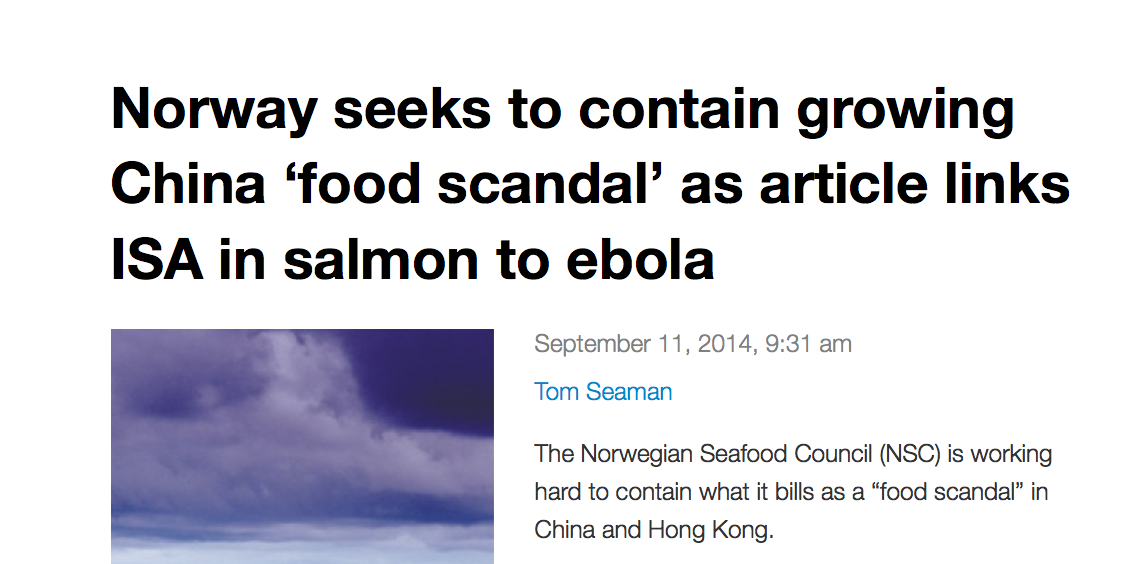
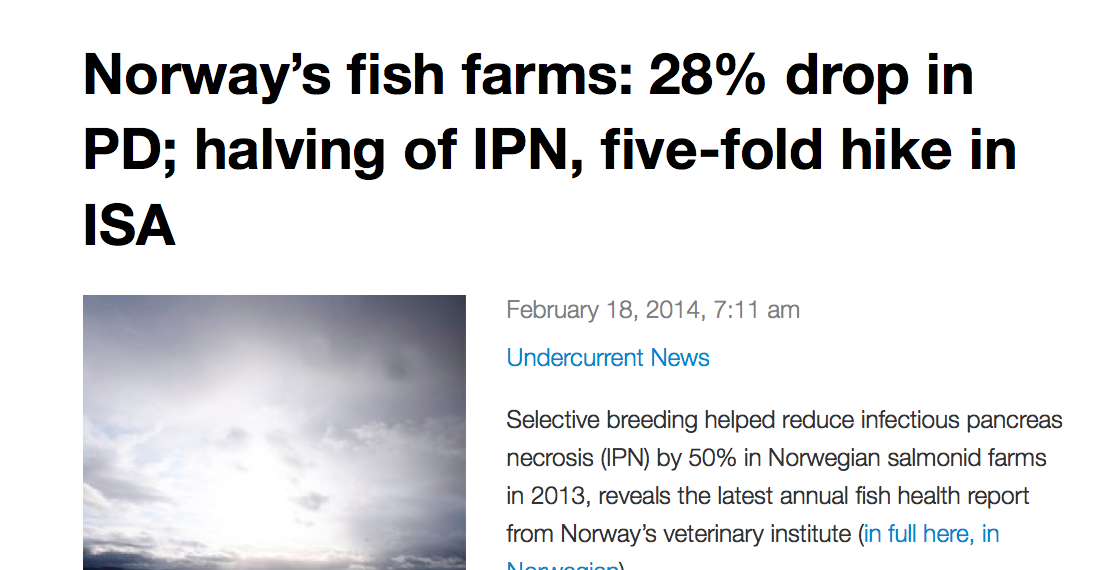
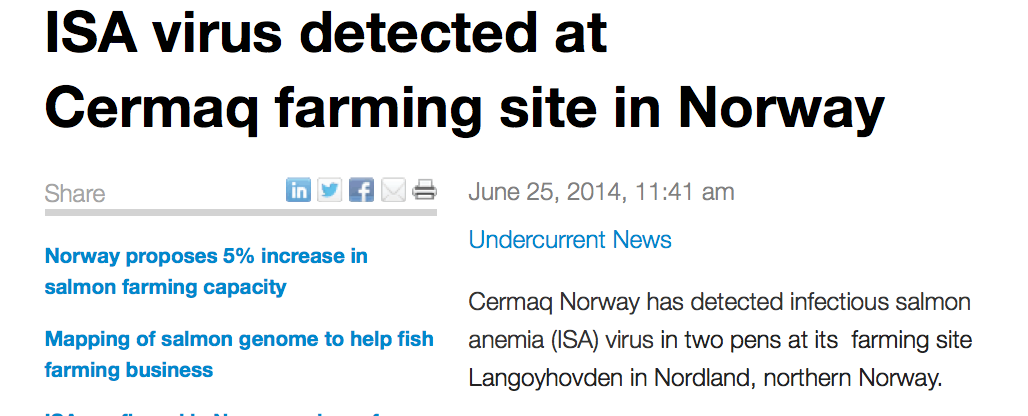
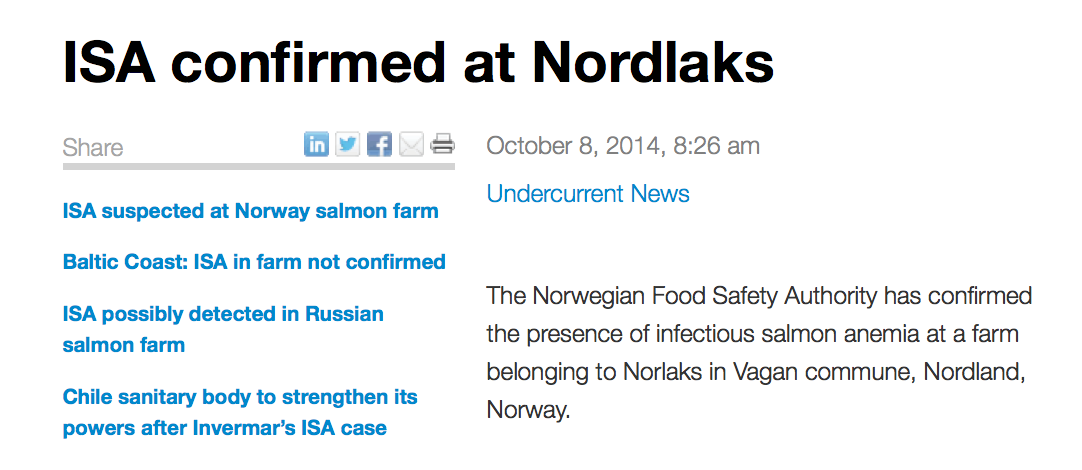
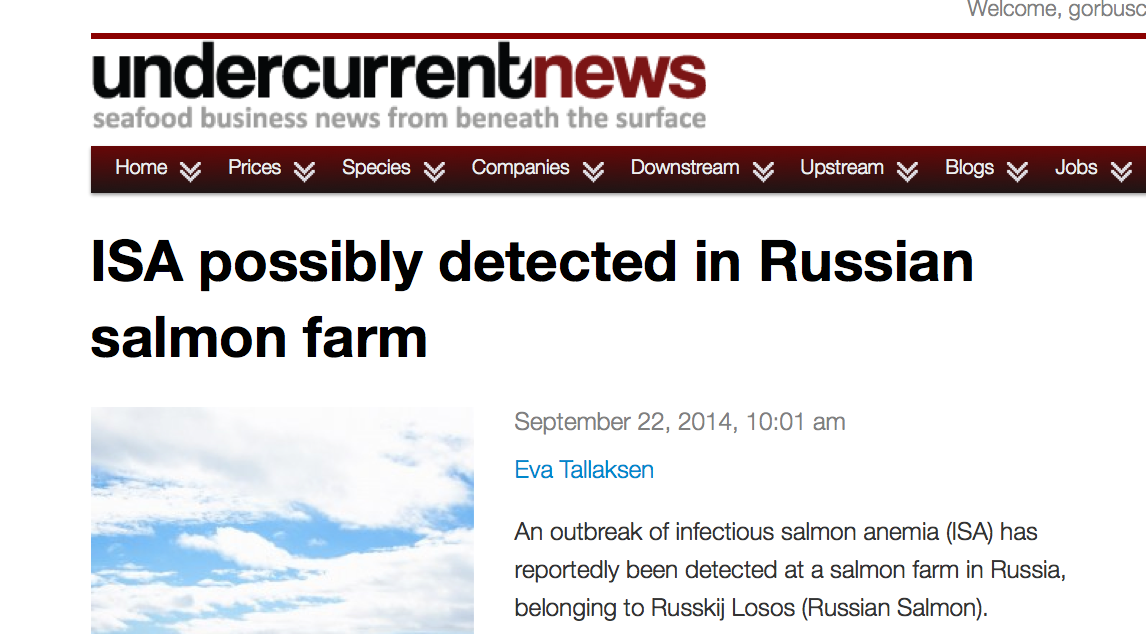
Thank you, I hope you can understand this is a high-priority question to the people of British Columbia, Canada. As you can see below ISA virus is a serious global problem with the salmon farming industry.
Alexandra Morton
Independent Biologist
If you would like to email the CFIA: Ian.Alexander@inspection.gc.ca
If you would like to email the federal Minister in charge, Rona Ambrose: rona.ambrose.c1a@parl.gc.ca
If you are American and would like to contact USDA Chief Veterinary Officer John Clifford: john.clifford@aphis.usda.gov
If you would like to make a monthly donation to this work: