As we examine salmon coast-wide and deep into the interior of BC, I can see each fish has a story. The marks on its body, the size of its spleen, the condition of its heart, the colours in its eyes. I don’t know what these signs mean yet, but as test results come back we will start piecing things together.
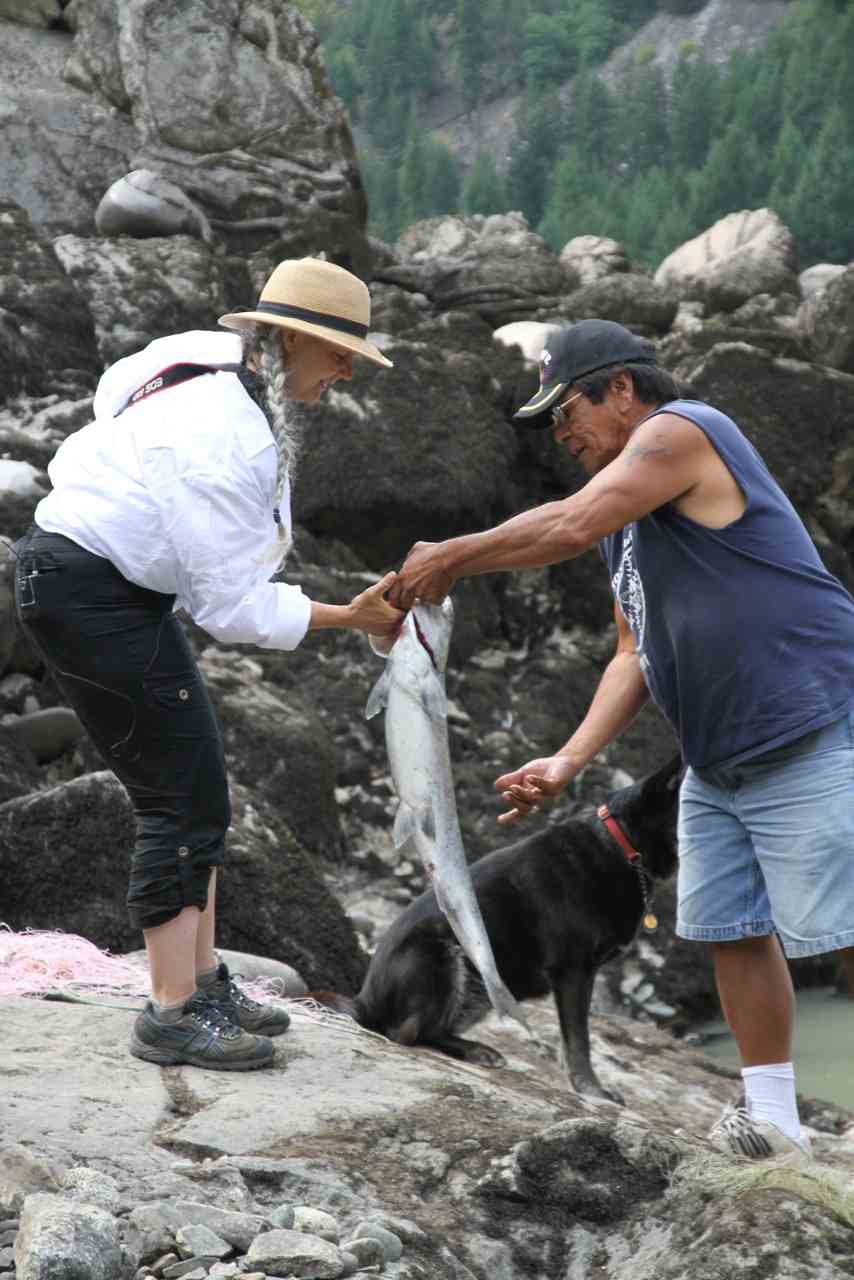
We went back to Boston Bar where Roy Campbell and his daughter Tamara very kindly let us come with them again to their fishing spot. We trained Tamara, who was very quickly helping us remember all the data to be taken from each fish. Tamara wants to continue this work, keeping a close eye on the salmon in her region of the Fraser River.
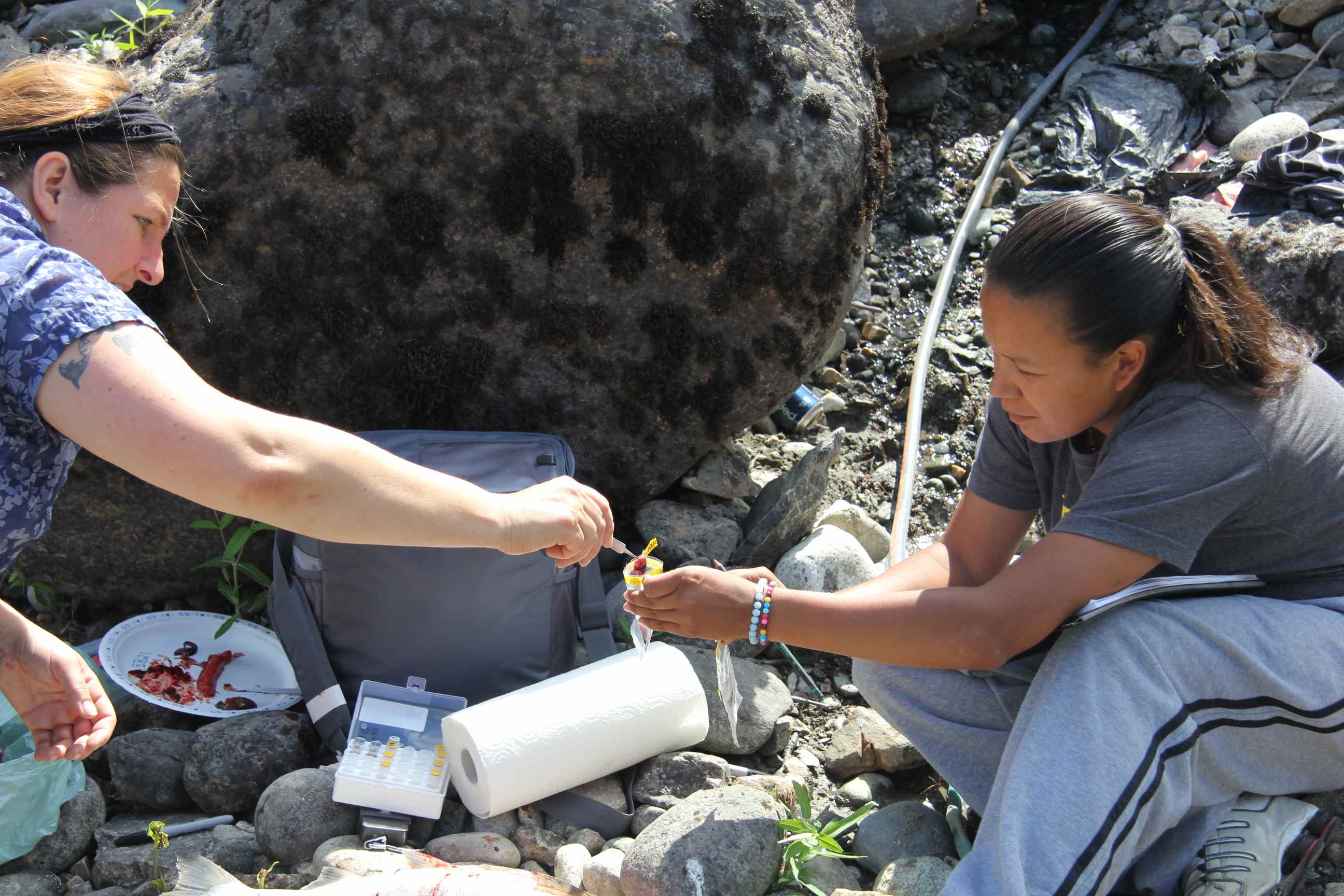
Boston Bar is located after a number of very strong rapids, including the famous Hells Gate. I am interested to know if the salmon heart virus, piscine reovirus, which we have found in nearly 100% of some groups of Atlantic farm salmon we have tested, is in fish before and after Hells Gate. The labs report that the sequence data they are getting from our samples suggests this is a Norwegian virus. Norwegians that I have spoken with suspect a fish with this virus cannot swim up a river. Interestingly, the hearts of salmon right after Hells Gate are soft – a possible sign of this virus, but the fish much further up the river have firm hearts.
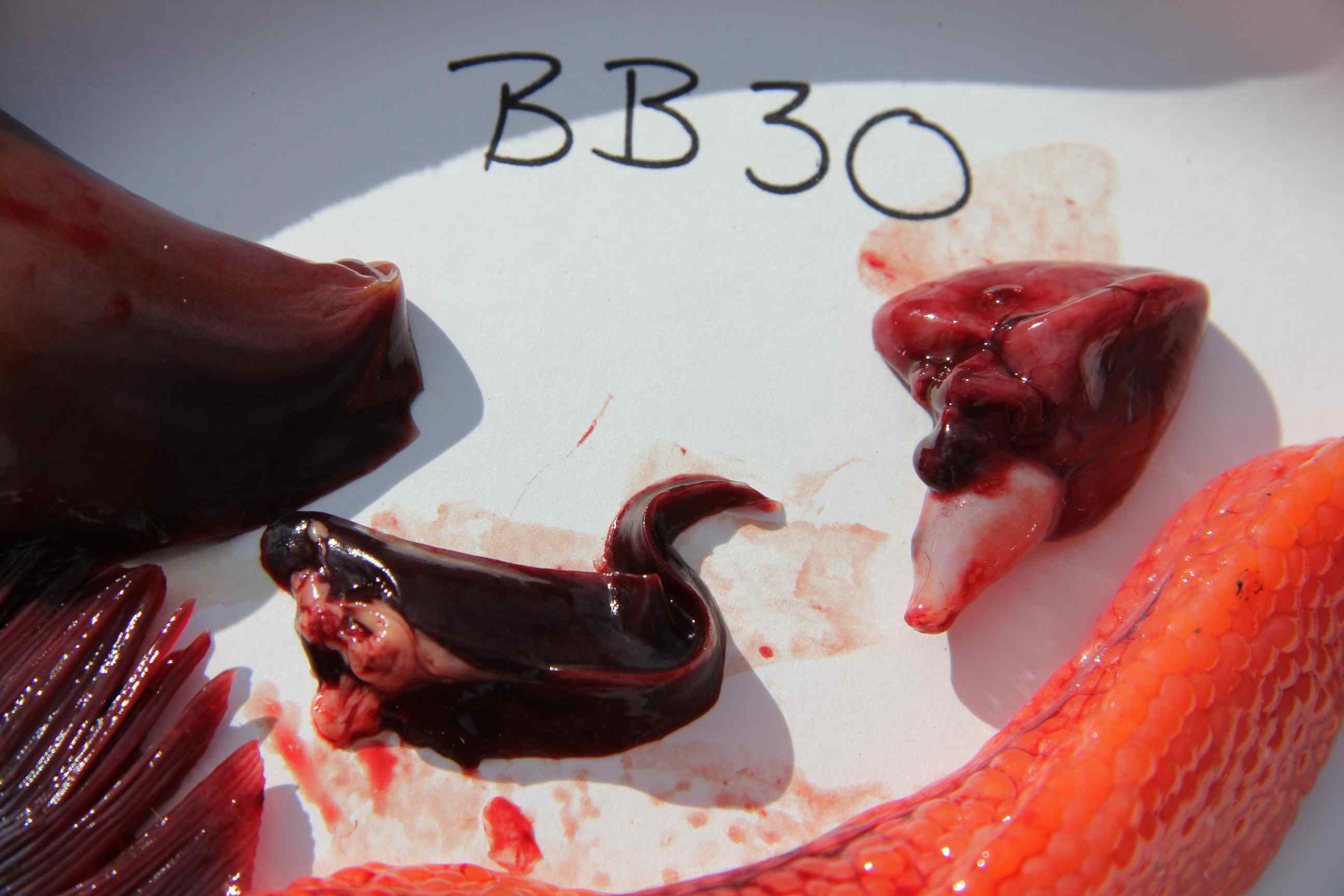
You can see in this picture from Boston Bar that the heart (with the white tissue at one end) is sagging, pinched inwards. Whereas the heart below from Scotch Creek is firm:
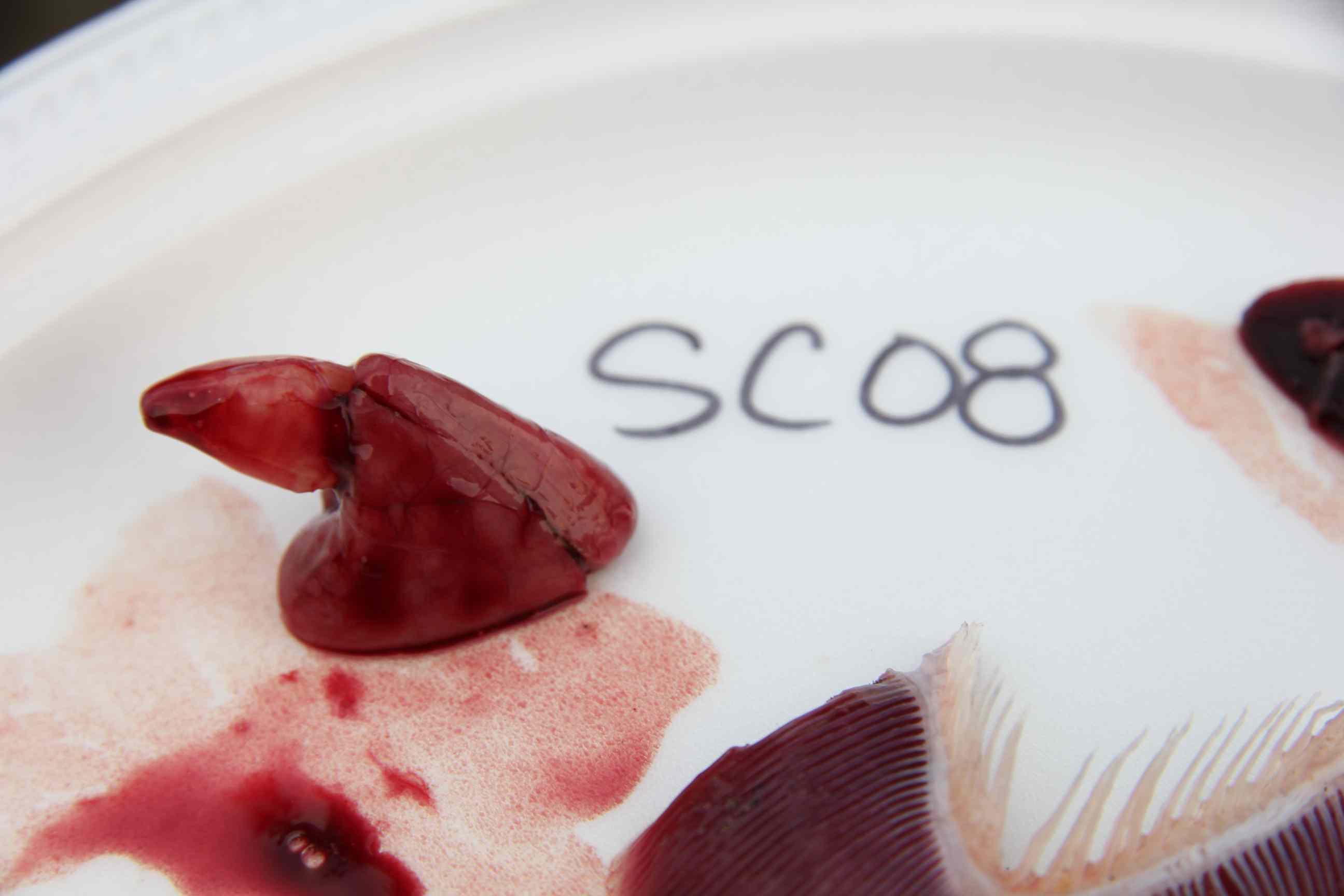
Does this mean the Boston Bar fish has piscine reovirus? We don’t know, it could be that all fish that have just swum through these rapids have softened heart muscle for a period of time. Or it could be that all the fish we are looking at with soft hearts will not live to reach their spawning grounds. We will let you know the results.
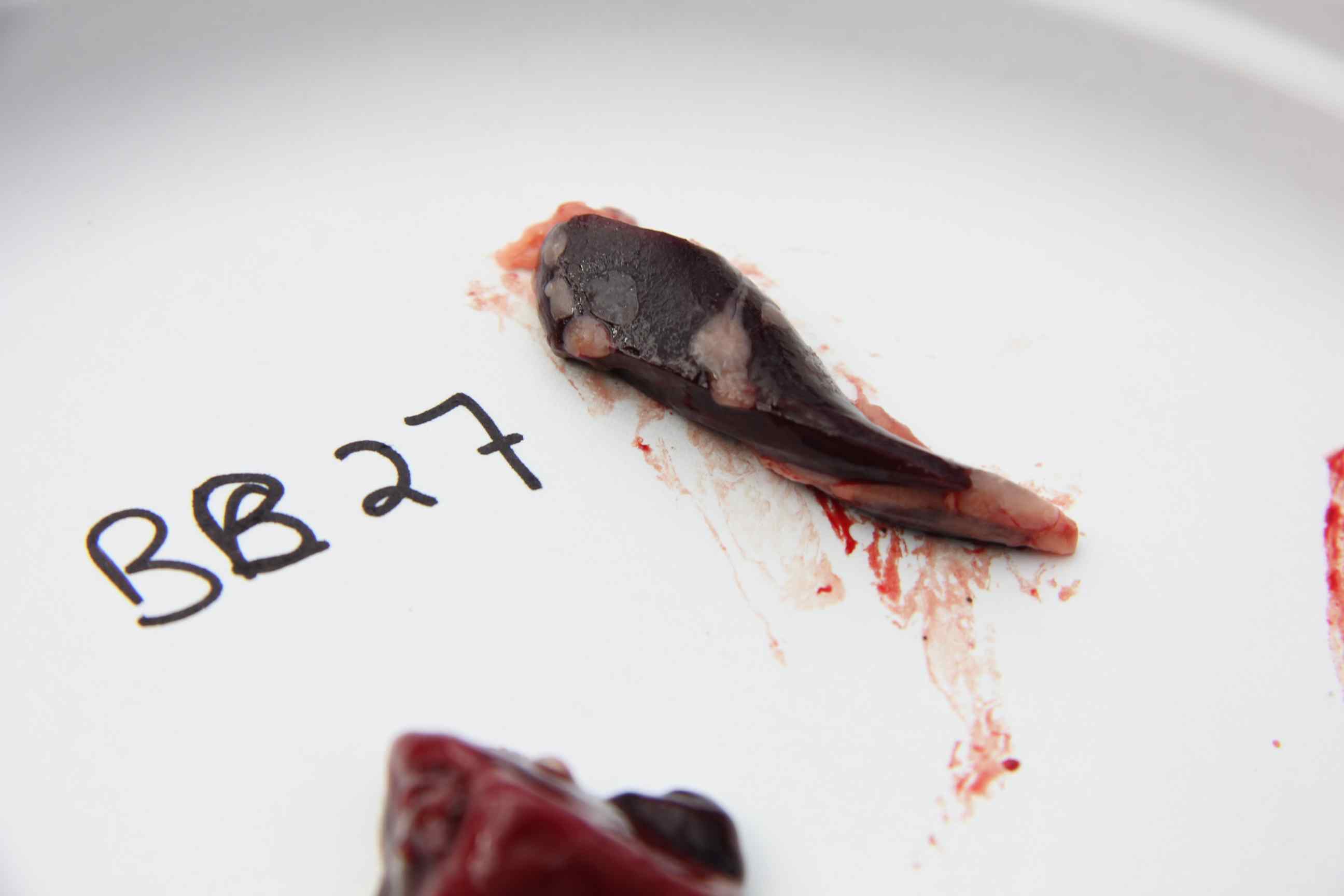
The spleen is the other organ of intense interest. In the Boston Bar picture above you can see the spleen is like a dark red, little flag with very sharp, crisp edges. But this spleen below from Adams Lake has rounded edges, and appears swollen.
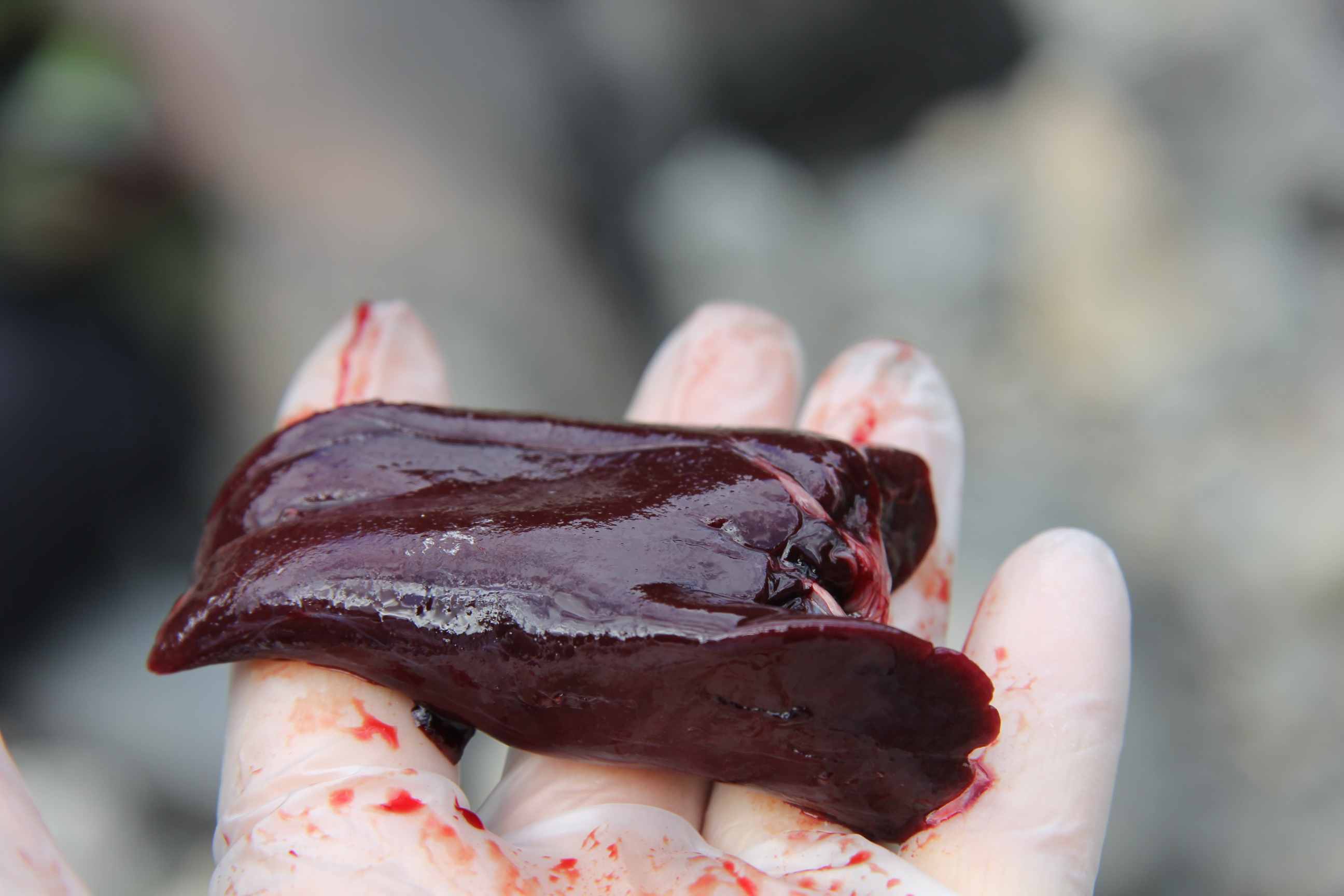
Some spleens are mottled with white fatty-looking material adhered to them:
The most beautiful part of these fish, each caught for food, or dead on the riverside is their eyes:
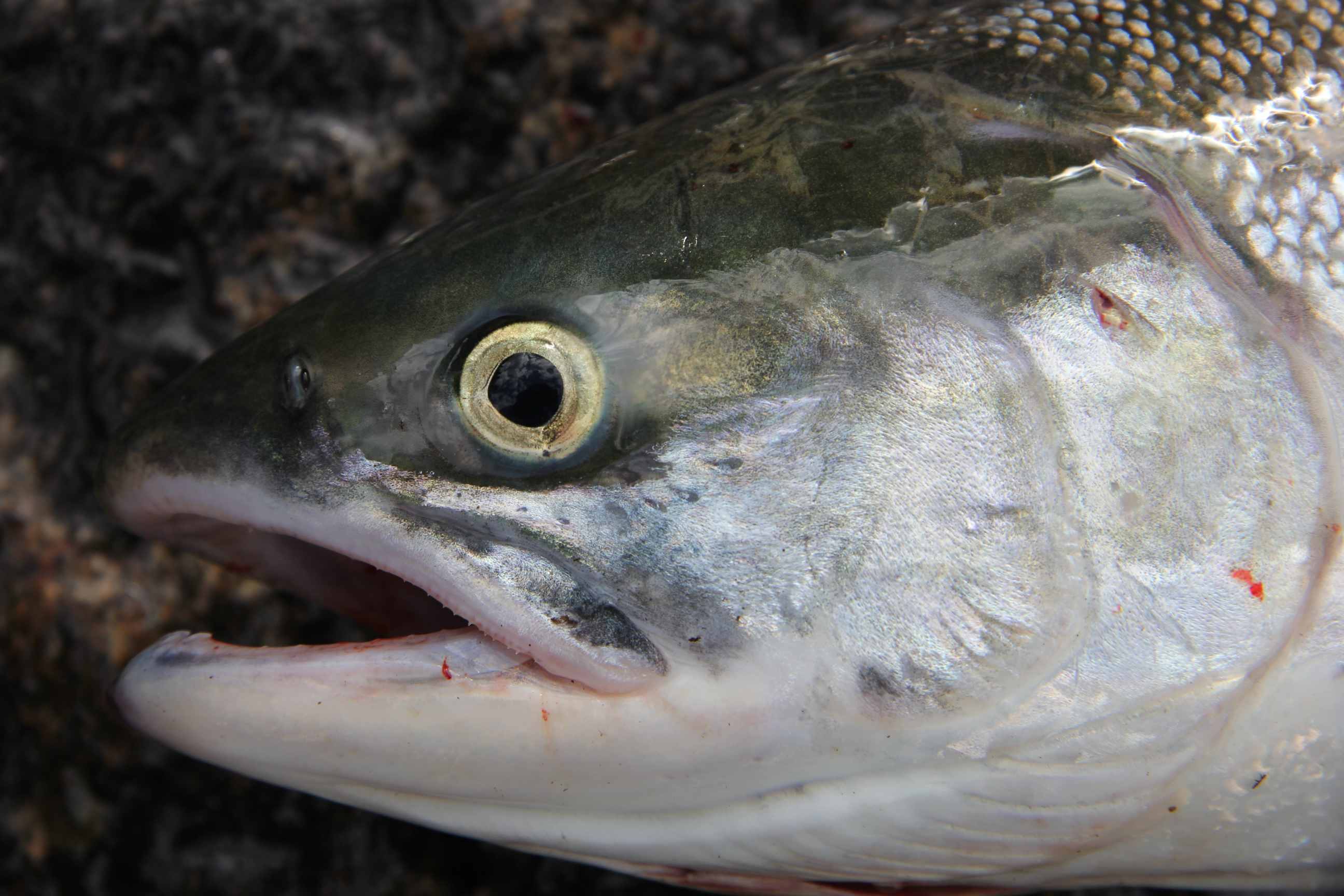
We note if the eyes are bulging at all from the head:
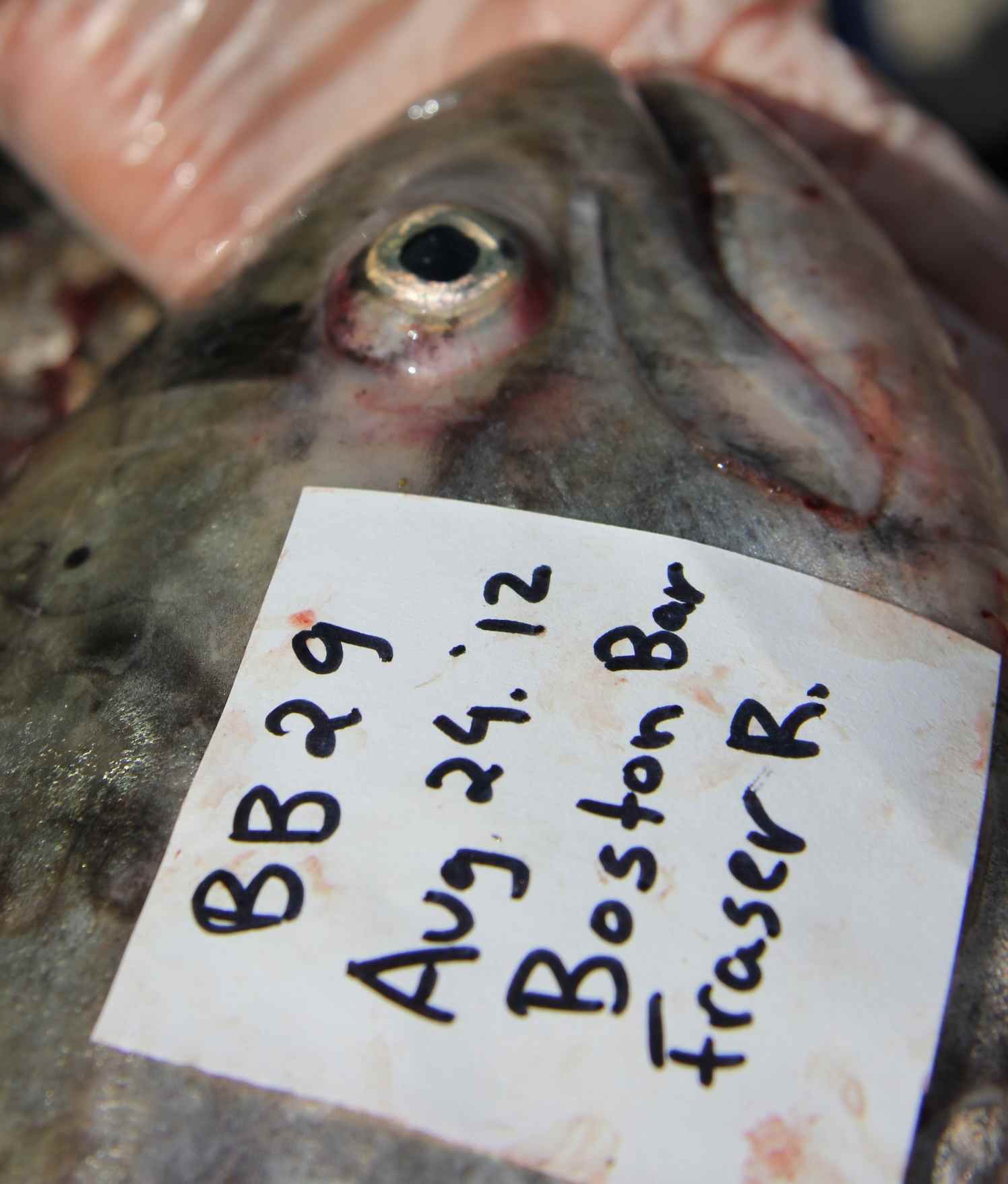
or have touches of red visible:
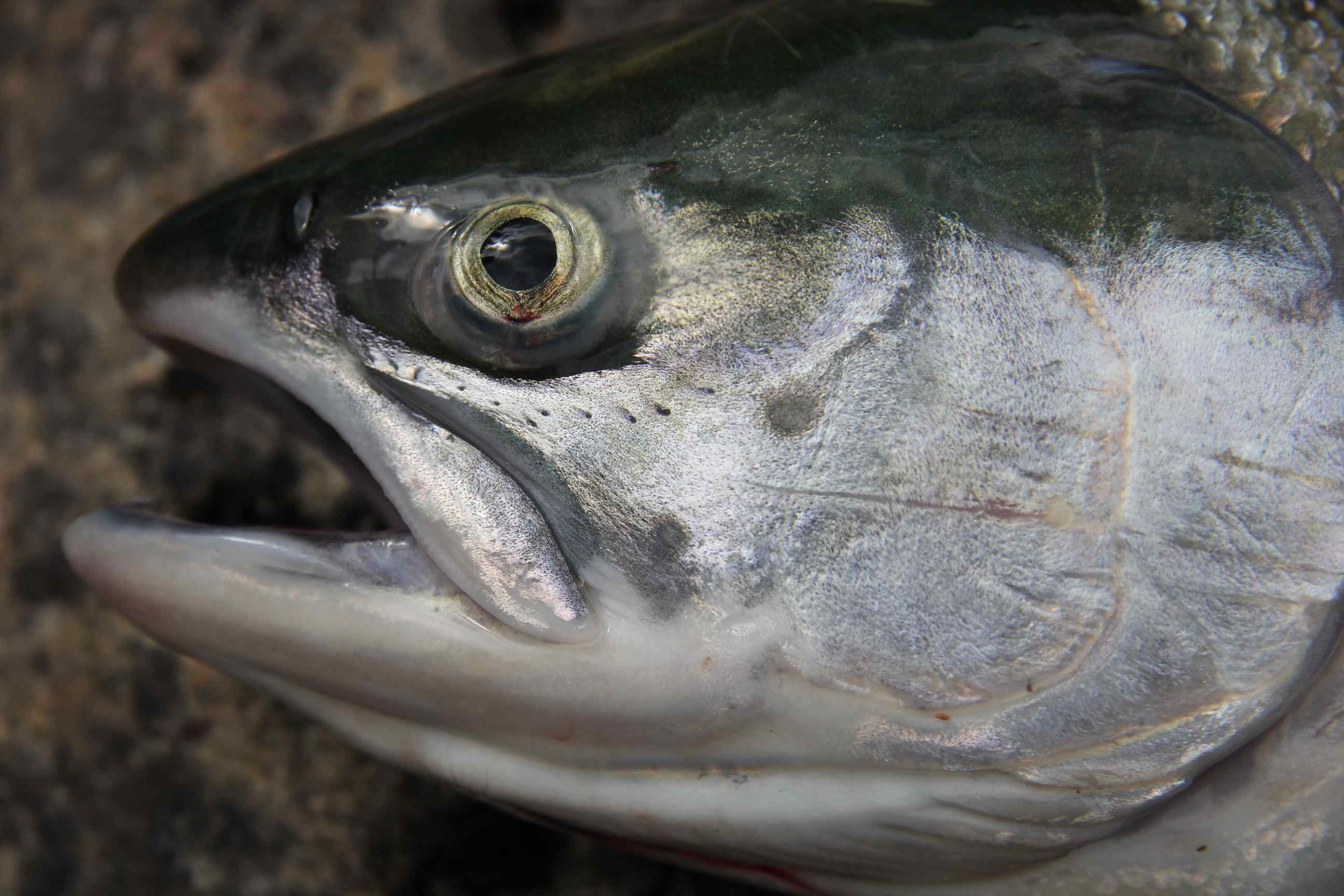

These are from salmon that died before spawning in Scotch Creek. We don’t know what this means, but we are noting it.
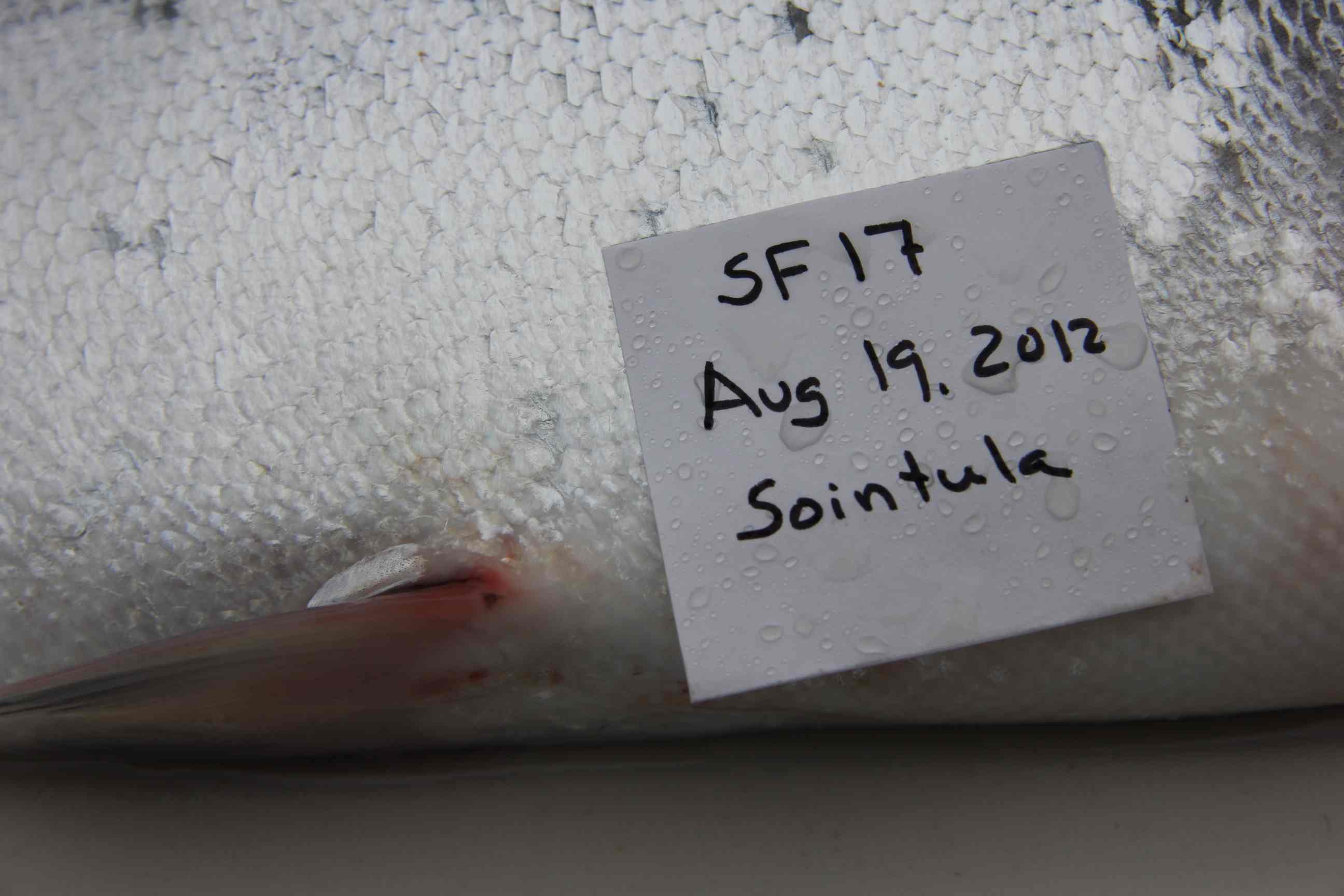
We have seen a large range of skin conditions from perfect, such as this chinook caught by arguably the best sportfisherman in Sointula, Randy Erickson

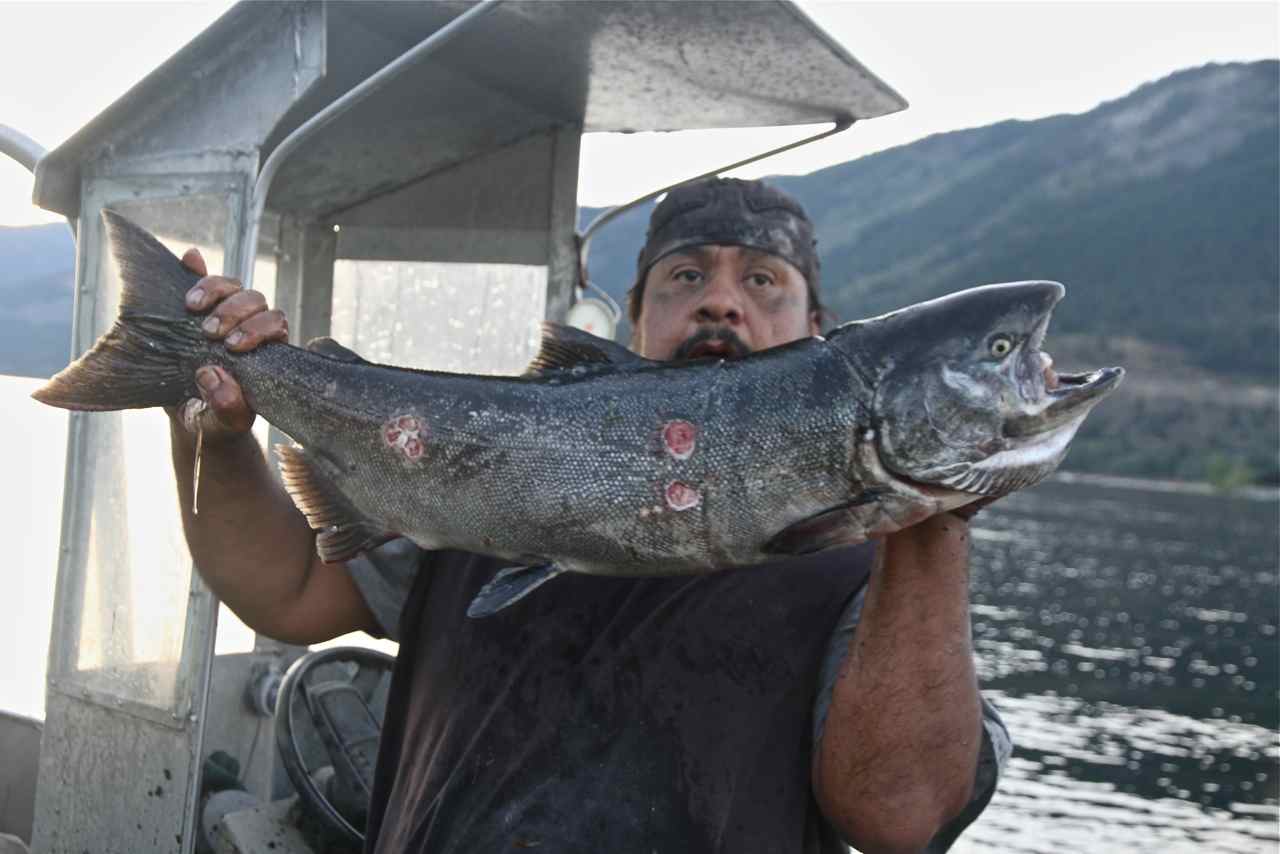
To open sores that could be wounds from the rapids:

To rash-like appearance:

And this:
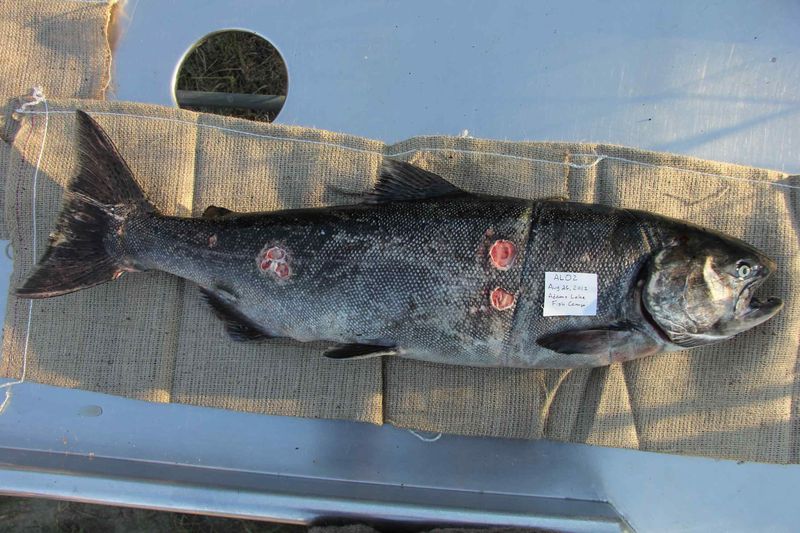
Gills are another organ with a lot of information about the fish. We went to Osoyoos Lake when we heard about the die-off there and found their gills were ivory white!
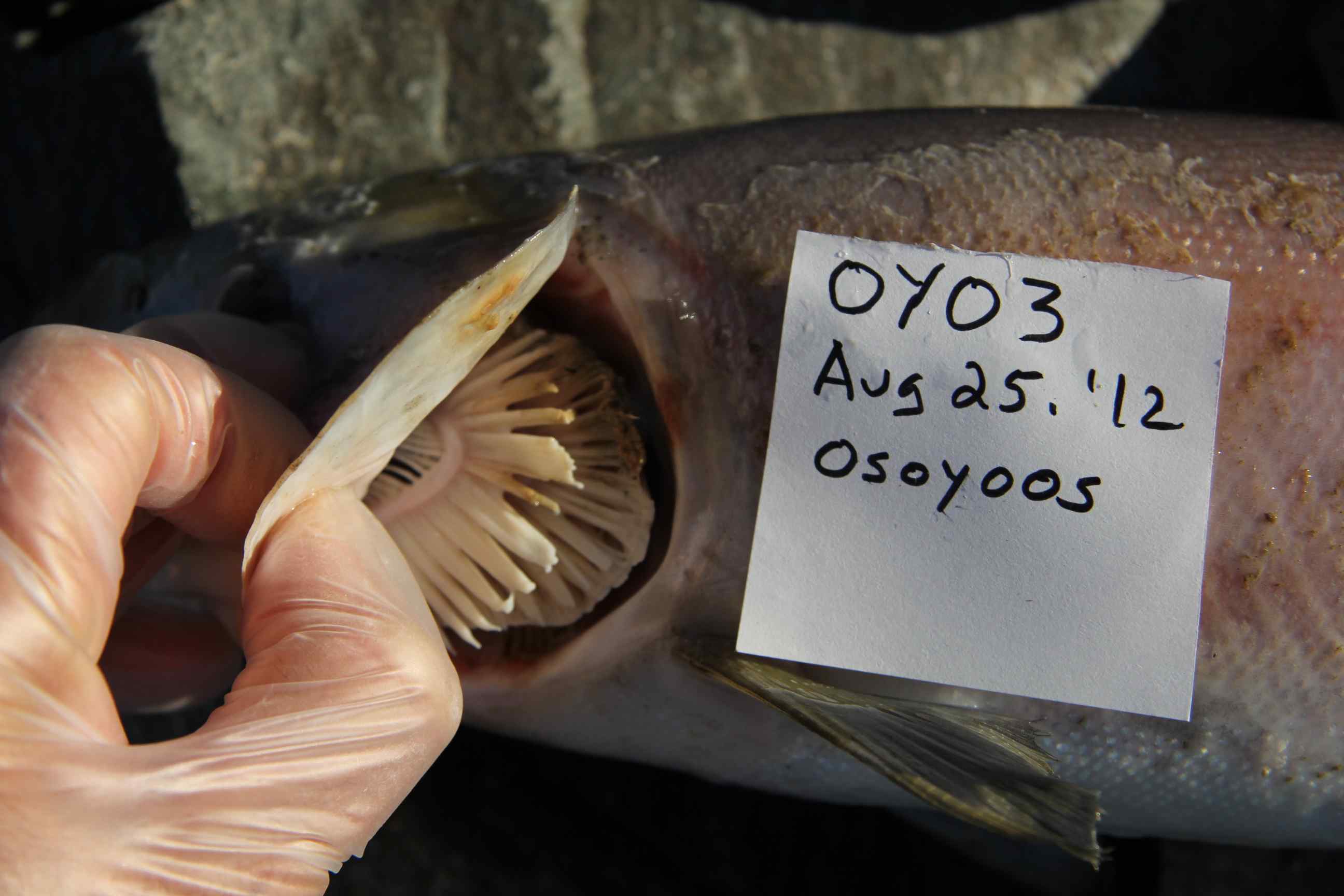
some were tipped with a yellow growth that seemed to erode away the gills:
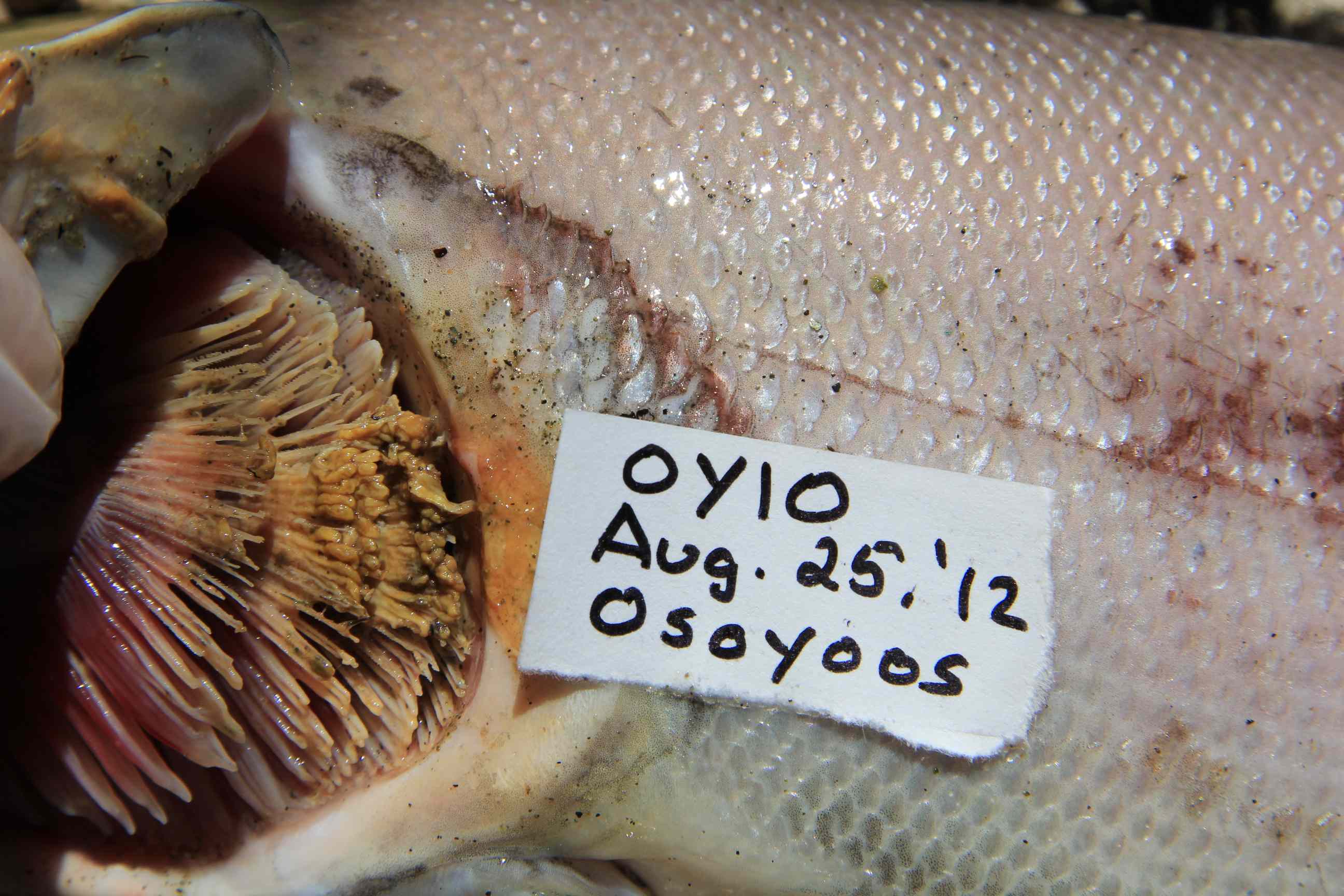
This growth has been noted as a symptom of Columnaris, which is believed to be the cause of these sockeye dying. Our work will inform us as to whether there was additional stress on the fish due to the European viruses we are looking for.

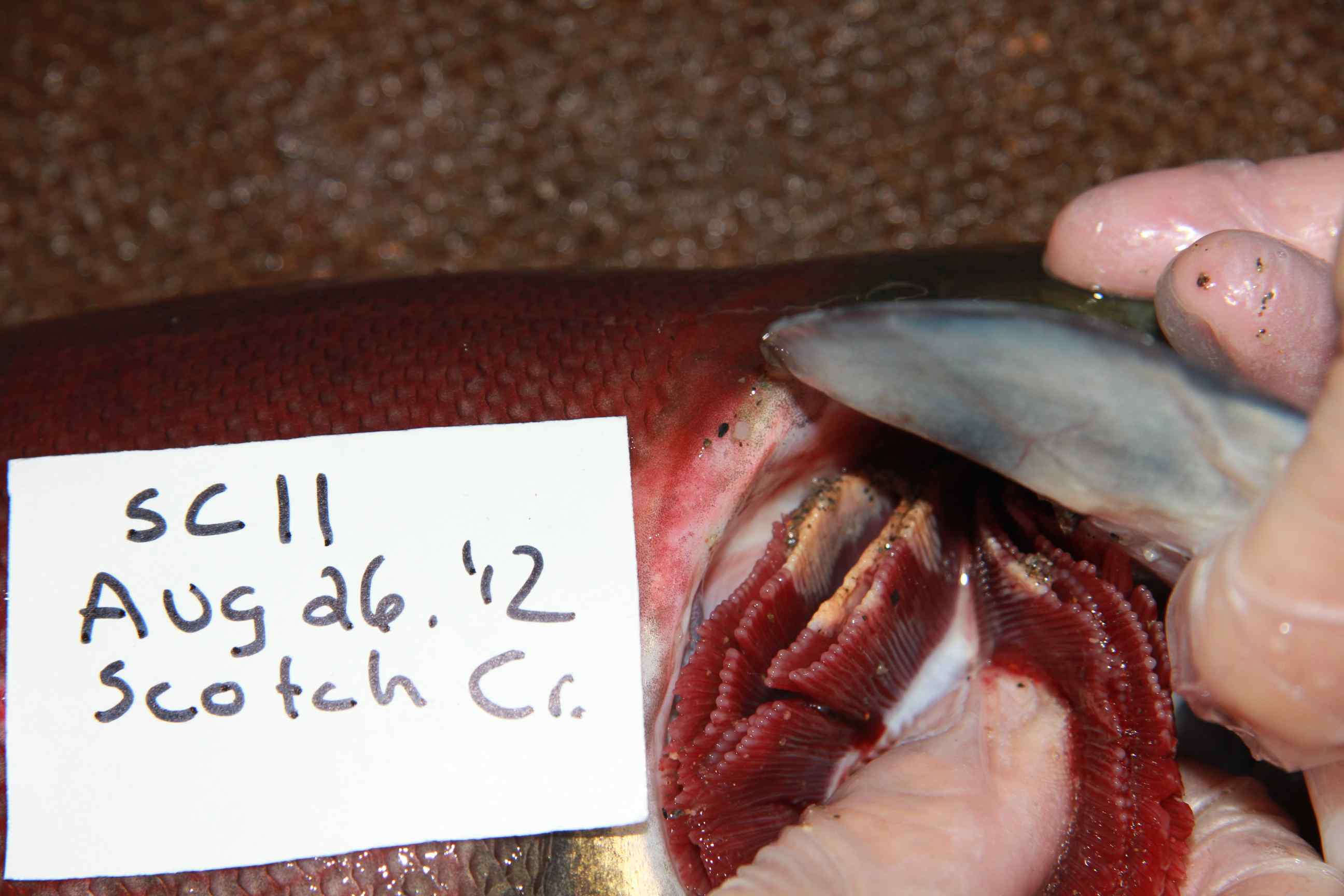
The sockeye at Scotch creek also have some yellow on their gills (above)
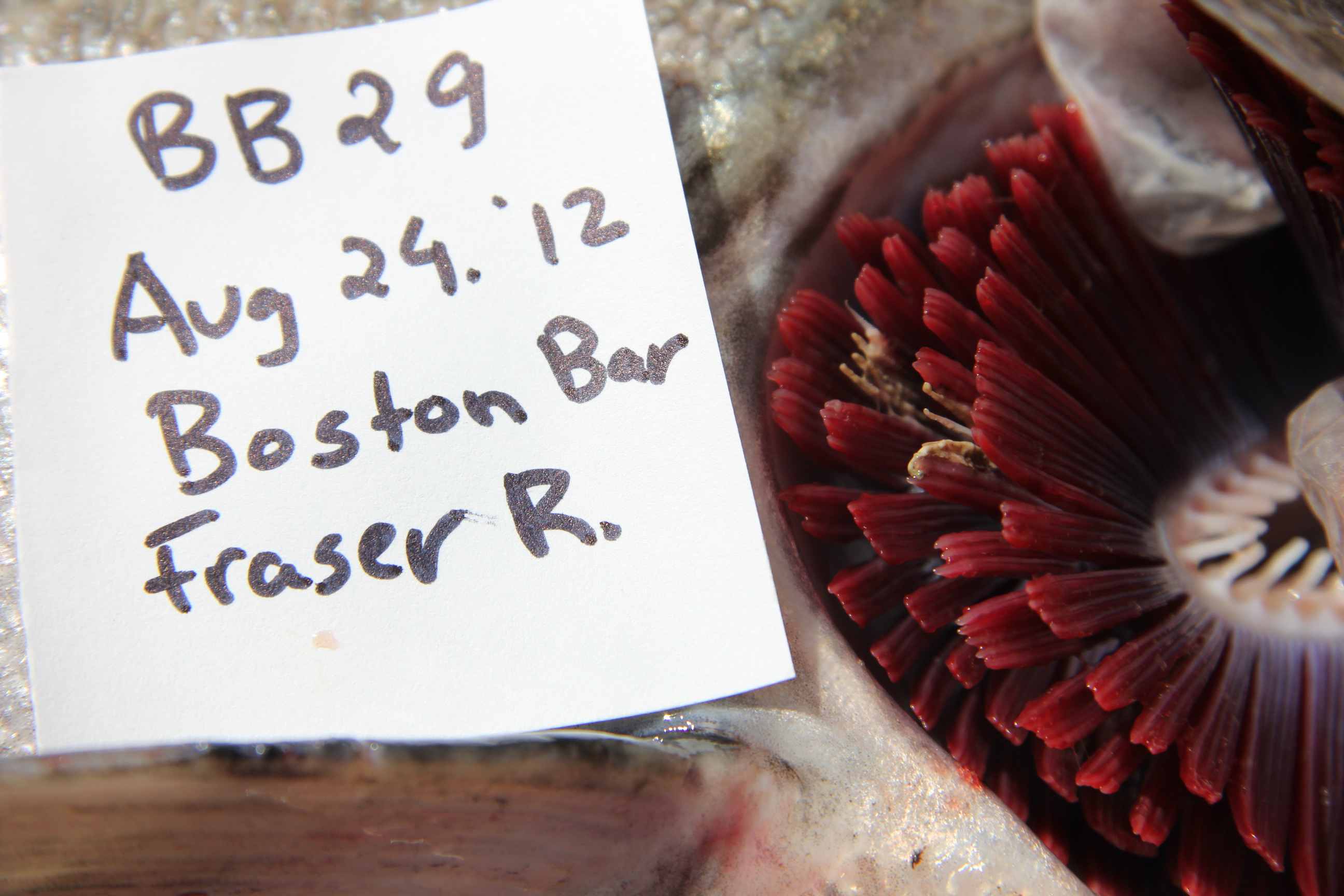
As did some of the fish at Boston Bar.
Osoyoos Lake is part of the Columbia River system, the other places we have sampled are in the Fraser River. We are highly vigilant in cleaning our tools nightly.
Another characteristic we are tracking is red-speckling of the belly:

and redness at the base of the fins:
As I said, every salmon has a story. They have all made a remarkable journey and some are worse for the wear, others are silver-clad and the picture of health. This is work and I am so thankful for all the help we have received.
Everywhere we go, we hear that people have been advised not to work with me, that I am a “fear-mongerer” that I am not adhering to First Nation protocol. If some are afraid of speaking openly and frankly about the condition of the salmon of this coast, I can’t help them. But I can say most of the people on the grounds with these salmon, want to know. We hear again and again that samples have been sent to DFO and no one ever gets back to them. Anissa and I have been following the whisperings of the salmon people. Everywhere we go people tell us about another place we should test, and give us contacts. We get our fish from fishermen, the samples are offered freely. We have not gone where people want us to keep out. Everyone has said We want to know everything possible about the salmon swimming past our village whether it is Sointula, Lillooet, Boston Bar, Cheam, etc. People are not afraid of knowledge, they can handle it.
Thank you Anissa for all the roadside repairs, keeping our wheels turning and doing ALL the driving as I enter data and make contact with the next location:
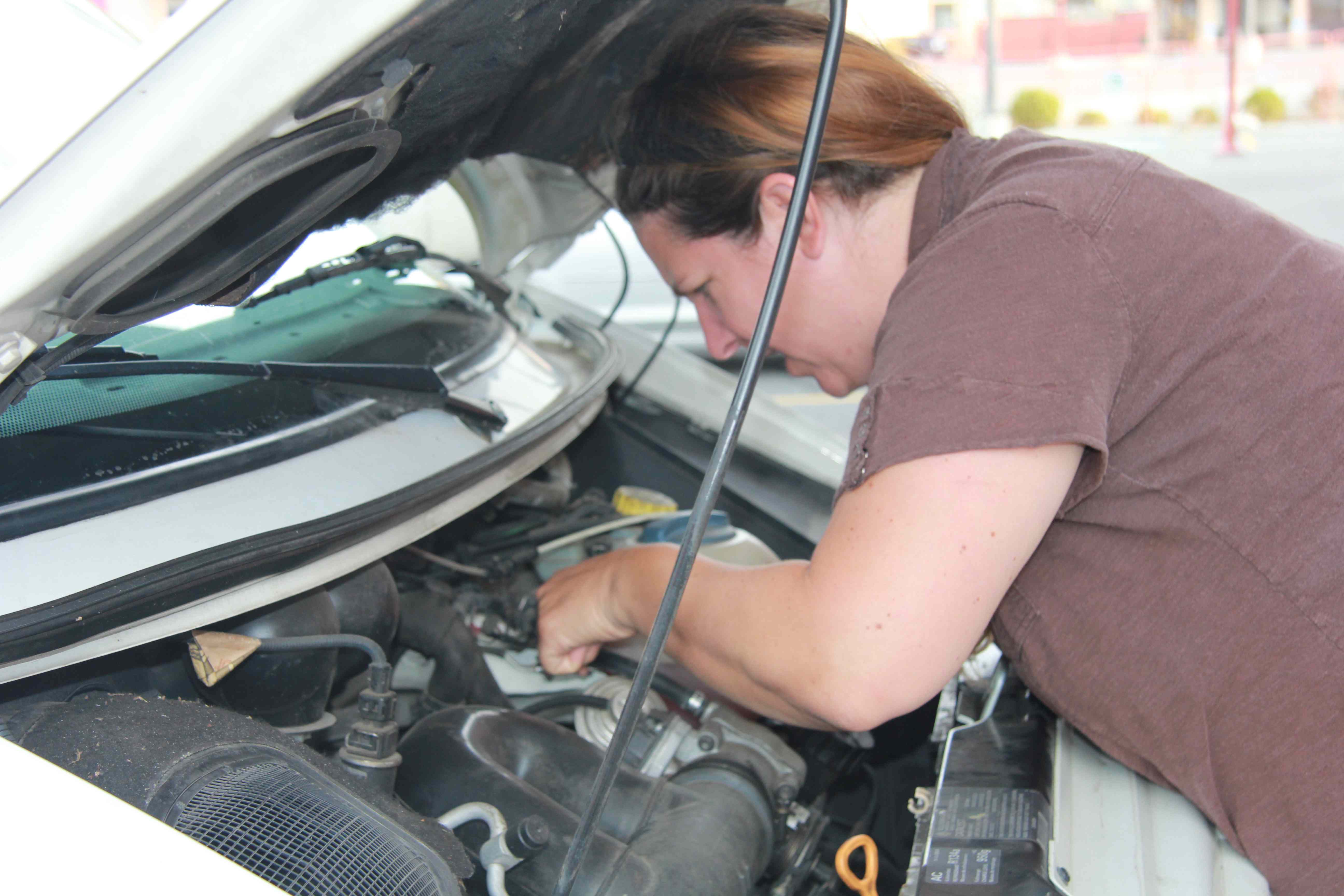
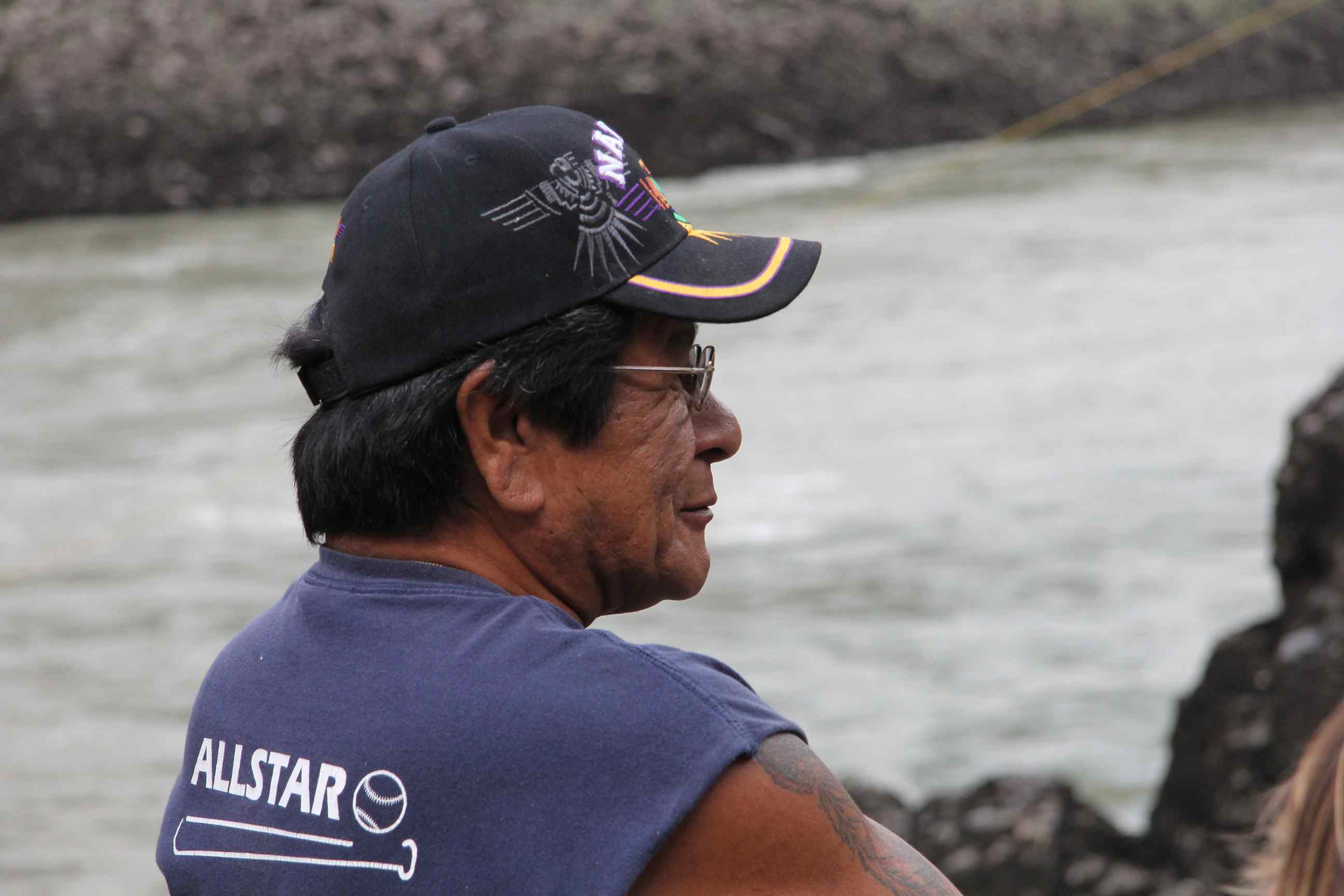
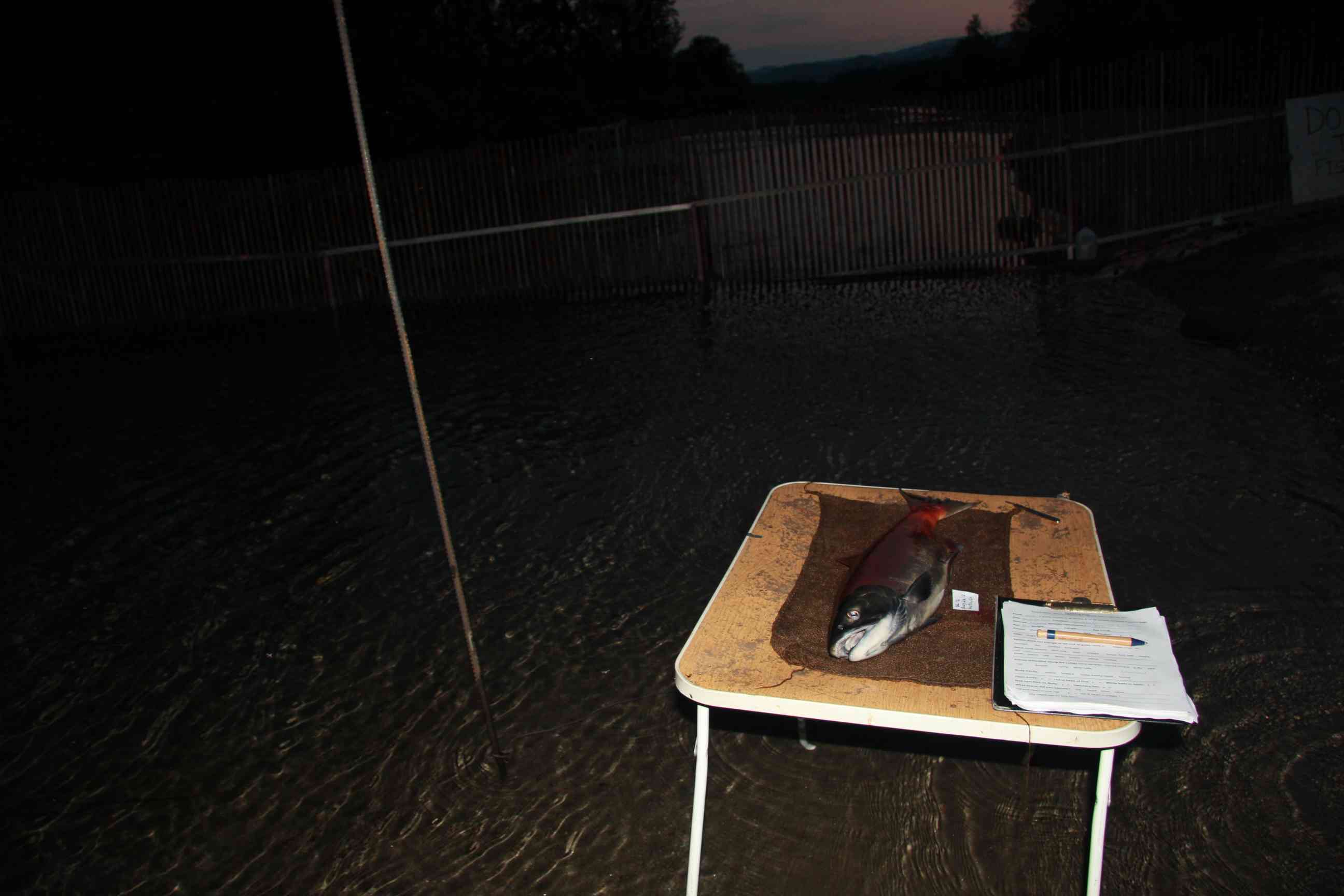
Here are some photos of the last 1000 km.



If you want to participate in growing this network of people on the grounds, watching over wild salmon you can:
donate much – needed funds
Alert us to salmon you feel should be tested for the European viruses at: deptwildsalmon@gmail.com
I am working towards building a community of people who want wild salmon, especially the people we are meeting throughout BC who are on the grounds with enormous knowledge about the salmon they eat, protect, count and simply care about. Our first mission is tracking the viruses government says are not here. After that we want to work towards bringing together the brilliance of genomic profiling and the hard-won on-the-grounds knowledge to learn to work WITH wild salmon for the benefit of all.
Comments
2 responses to “Reading the Fish”
I will rally the troups at our next conservation meeting and spark the members into raising funds for your good work. Thank you Alix.
The round sores, shown both up close on BB29 as well as on a whole chinook lower down, are very characteristic of lamprey wounds.