Below is the summary of all lice numbers reported on Atlantic salmon farms throughout BC (Figure 1). The data comes from the Mowi, Cermaq and Grieg websites. Only salmon farms that are certified, or where certification is pending are reported weekly. This leaves quite a few farms that are reported only monthly. Some certified farms are also skipping reporting in some weeks. Notably Mowi’s Chancellor Channel site in the Discovery Islands, which has undergone two sea lice treatments this year and entered the juvenile outmigration period over the limit and out of compliance with its licence, has not reported since March 28. All the farms in Sechelt Inlet (Grieg Seafood) are reported as fallow.
On the second page is data from the 1st week of juvenile wild salmon sampling in the Discovery Islands (Figure 2). Most of the salmon farms in the Discovery Islands are empty. According to the Minister of Fisheries this is permanent for all but two sites which Mowi is fighting to restock one more time to be emptied permanently by June 2022.
Farm lice
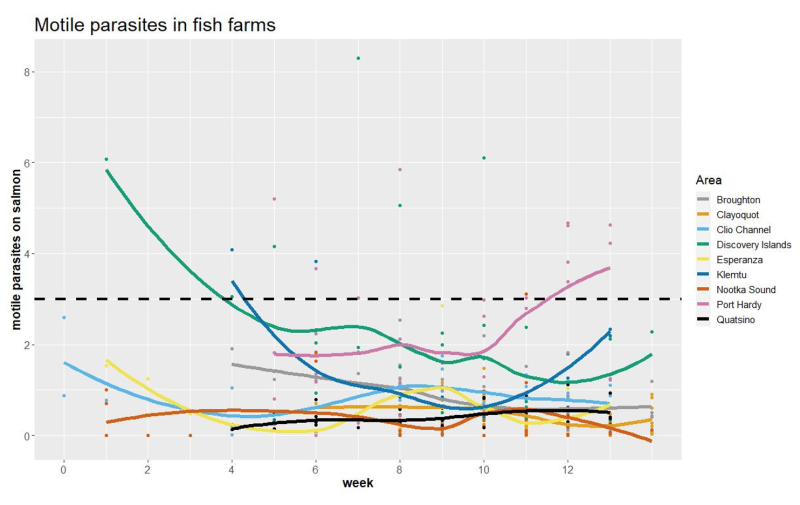
Figure 1: The purple line is the number of adult-stage lice in the farms off Port Hardy. Sea lice there continue to rise above the level considered safe, by the provincial and federal governments, for wild salmon (dotted line). The blue line rising rapidly is the number of lice in farms on the central coast near Klemtu. Third highest, the green line, is the Discovery Island farms that are still stocked. Not visible yet are the juvenile lice on farms in Quatsino. All four of these regions are used exclusively by Mowi, with the exception of one Cermaq farm in the Discovery Islands that is in the process of harvesting.
Sea lice on young pink and chum salmon in Discovery Islands April 6, 2021
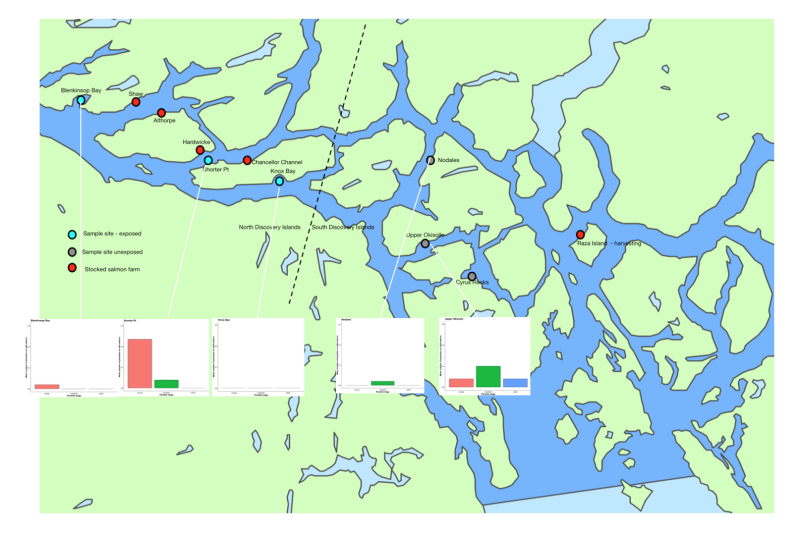
Figure 2: The six blue and grey dots are where we are catching young pink and chum salmon and counting lice on them. No fish were found at Cyrus Rocks this week. The red dots are farms that currently have Atlantic salmon in them. While the wild salmon are generally moving from the right to the left, there are many small salmon streams in this area, so I don’t know if the fish I examined traveled through the entire region or entered the ocean near the site where they were caught.
The most important information here is not only the number of lice, but also how old the lice are. Decades of research show that the youngest lice (orange bar) occur near active salmon farms. How close the orange bars are to the red dots tells us whether the farm is infecting the wild salmon.
Findings at each sample site
Upper Okisollo – there were 9 lice total on 50 fish. Last year the average infection in this location reached 9 lice per fish. While there are no active farms currently in Okisollo, ocean currents move logs and debris quickly from the Raza Island area into Okisollo. This means both fish and larval lice are also moving in this current. Most of the lice on fish caught in Okisollo are older lice, which suggests they did not get infected locally, that they arrived already carrying lice.
Nodales – there was on 1 louse total on 50 fish and it was an older louse suggesting the fish had picked it up a week or so before.
Knox Bay – no lice!
Shorter Point – This sample site is in a channel with two active salmon farms. The youngest stage of lice dominated the infection of the young pink and chum salmon suggesting the infection occurred in that location.
Blenkinsop Bay – This site is close to two active farms and the sea lice were the youngest stages.
Summary
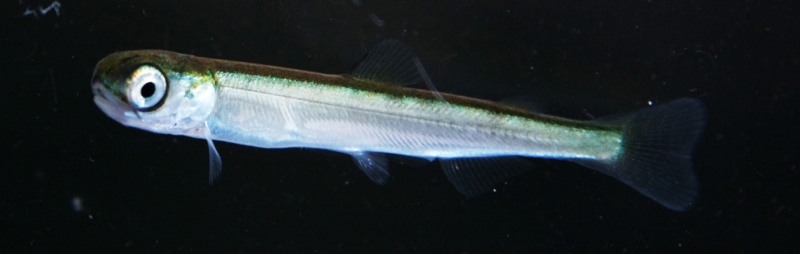
These fish, caught on April 6, were tiny – average length 35mm. Their bellies still show the seam where their yolk sac recently protruded. They have not been in saltwater for very long. Water temperature was low ~ 8oC and salinity was also fairly low ~29 ppt (parts per thousands). Both will rise through the spring speeding up sea lice reproduction. Data will be collected every other week.
Mowi had their delousing ship Aqua Tromoy working in the area from February until recently.
Because the Minister of Fisheries has prohibited restocking of salmon farms in the Discovery Islands, there are ~ 5 million fewer Atlantic salmon in the region this spring than other years. For example, last year there were four farms operating in just Okisollo Channel, which is now farm-free. As a result, lice levels are very low and young wild salmon look good. However, signature farm lice infections are occurring where wild salmon get close to an operating farm.
Young pink and chum salmon move through the region slowly and we will keep an eye on them over the next three months. We will see if Mowi can bend their lice curve back downward. This work covers only sea lice, not the spread of viruses and bacteria we know are also being released by salmon farms.