Piscine reovirus (PRV) is a threat to our coast, and to the salmon farming industry. The industry indicates that they can't or won't survive in BC waters without it. Either they need it to protect their fish from IHN, as recent research suggests or they simply can't get rid of it. It is highly contagious.
Over 80% of the BC salmon farming industry is infected with PRV. Washington State prohibited farm salmon infected with PRV from entering Puget Sound farms. The court ruled BC farm salmon must be screened for PRV prior to a permit being issued by the Minister of Fisheries to transfer fish from hatcheries to sea pens.
However the Minister of Fisheries refuses to acknowledge this Federal Court decision.
So I sued the Minister a second time and the Namgis have also sued the Minister of Fisheries.
My suit is based on Fishery General Regulation, section 56 which prohibits transfer of fish infected with a "disease agent" into Canadian waters
The Namgis sued the Minister of Fisheries and Marine Harvest to stop them from putting PRV-infected farm fish into their territory.
This is a critical moment in the future of salmon farming and wild salmon in British Columbia.
PRV is a disease agent.
Ultimately U.S. and Canadian wild salmon will be severely challenged to survive exposure to high levels of PRV in salmon farm waste plumes. PRV is just what BC and federal fisheries scientists and staff warned us about when Atlantic salmon were first in demand by the industry.
1986 – “I trust that you and your staff fully appreciate that this question of the introduction of exotic races of salmonids into British Columbia is probably the most critical issue ever to face the maintenance of wild salmon stocks.” (Director, Dave Narver, BC Ministry of Environment to Bruch Hackett Assistant deputy Minister MAFF)
1990 – “Continued large- scale introductions from areas of the world including Washington State, Scotland, Norway and even eastern Canada would eventually result in the introduction of exotic disease agents of which the potential impact on both cultured and wild salmonids in B.C. could be both biologically damaging to the resources and economically devastating to its user groups.” DFO Director General, Pat Chamut to Director Pacific Rim & Trade, A. Sarnia
2003- Failure to provide permission for egg importation may trigger a trade challenge under the World Trade Organization…” Oct. 3, 2003 Briefing Note For The Director General
see more on the origins of salmon farms in BC
I am in Federal Court September 10 – 14, represented by Ecojustice to try, once again, to enforce Canadian law
The Namgis, represented by Gowling WLG, are fighting to keep PRV-infected farm salmon out of their territory, a reasonable request as that is the law.
I will be posting updates on this blog daily as I hear the arguments from all sides.
Below are photographs for download and the documents associated with my lawsuit.
Notice of Application filed in Federal Court:
Alexandra Morton challenges the Minister of Fisheries and Oceans' (the "Minister") ongoing policy or practice of issuing fish-transfèr licences without first considering whether Piscine reovirus and Heart and Skeletal Muscle Inflammation ("HSMI") are present in the fish proposed for transfer (the "Illegal Policy"). The Illegal Policy is contrary to s. 56 of Fishery (General) Regulations (the "Regulations") and therefore unlawful. Section 56(b) requires that fish to be transferred do not have any disease or disease agent that may be harmful to the conservation and protection of fish.
Download 2016 10 12 – Notice of Application – Filed
Conflicting industry statements re PRV infection levels:
- Publicly the salmon farming industry states that "The virus, he said, is rarely detected at hatcheries in B.C. and instead is contracted in the marine environment." (Shawn Hall spokesman for BC Salmon Farmers Association, The Star Vancouver
- In Marine Harvest Affidavits the company states: "PRV has been found in all but one of Marine Harvest's hatcheries." pg 197
- "I am informed by Dr. Diane Morrison, a veterinarian employed by Marine Harvest as its Director of Fish Health and Food Safety, that Marine Harvest has since 2010 tested thousands of samples of its fish for PRV and HSMI. Dr. Morrison has informed me that PRV has been found in some of our hatcheries." pg 81
- "If the relief sought by Ms Morton is granted it will severely impact Marine Harvest – she attacks the legal basis for Marine Harvest's transfer of fish. If the ITC's [Introduction and Transfer Committee] decision or policy to allow fish with PRV to be transferred is successfully challenged [for a 2nd time], Marine Harvest's legal right to transfer fish with PRV to its marine sites and in between its marine sites will be undermined." pg 8
Download Marine Harvest Affidavits
It's the Law – Canada prohibits transfer of fish infected with a "disease agent" into Canadian waters
Licence to Release or Transfer Fish
56 The Minister may issue a licence if
-
(a) the release or transfer of the fish would be in keeping with the proper management and control of fisheries;
-
(b) the fish do not have any disease or disease agent that may be harmful to the protection and conservation of fish; and
-
(c) the release or transfer of the fish will not have an adverse effect on the stock size of fish or the genetic characteristics of fish or fish stocks.
Section 56 (b) Fisheries General Regulations
2015 Rennie Decision I already won this case.
Download T-789-13 – Judgment and Reasons
DiCicco et al 2018 DFO paper reporting PRV causes Chinook salmon cells to rupture causing organ failure
"…migratory Chinook salmon may be at more than a minimal risk of disease from exposure to the high levels of PRV occurring on salmon farms."
Morton et al 2017 – Wild salmon exposed to farm salmon become infected with PRV
"These results suggest that PRV transfer is occurring from farmed Atlantic salmon to wild Pacific salmon, that infection in farmed salmon may be influencing infection rates in wild salmon, and that this may pose a risk of reduced fitness in wild salmon impacting their survival and reproduction."
Washington State denies permit for company to place 800,000 Atlantic salmon into Puget Sound net pens
"Citing the risk of fish disease transmission, the Washington Department of Fish and Wildlife has denied permission for Cooke Aquaculture to transport 800,000 juvenile Atlantic salmon from its hatchery near Rochester to net pens at Rich Passage in Kitsap County."
Washington Department of Fish and Wildlife NEWS RELEASE
Related news
The ‘Namgis, Kwikwasutinuxw Haxwa’mis and Mamalilikulla First Nations and the Province of British Columbia have executed a letter of understanding (LOU), formalizing ongoing talks regarding salmon aquaculture in the Broughton Area…The LOU takes effect immediately. The First Nations and British Columbia have begun the work necessary to implement the government-to-government process, and have 90 days to develop consensus recommendations.
Images
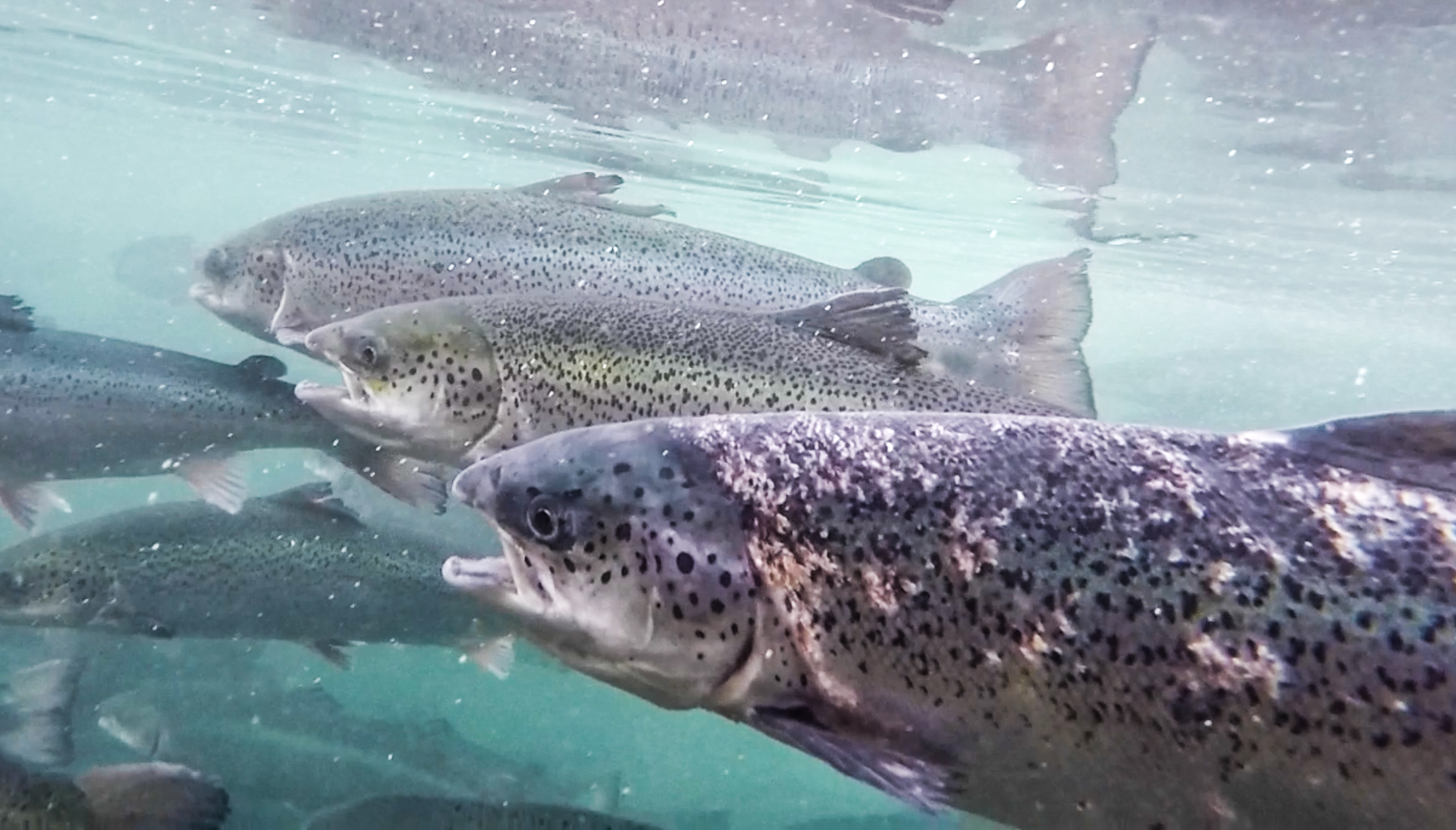
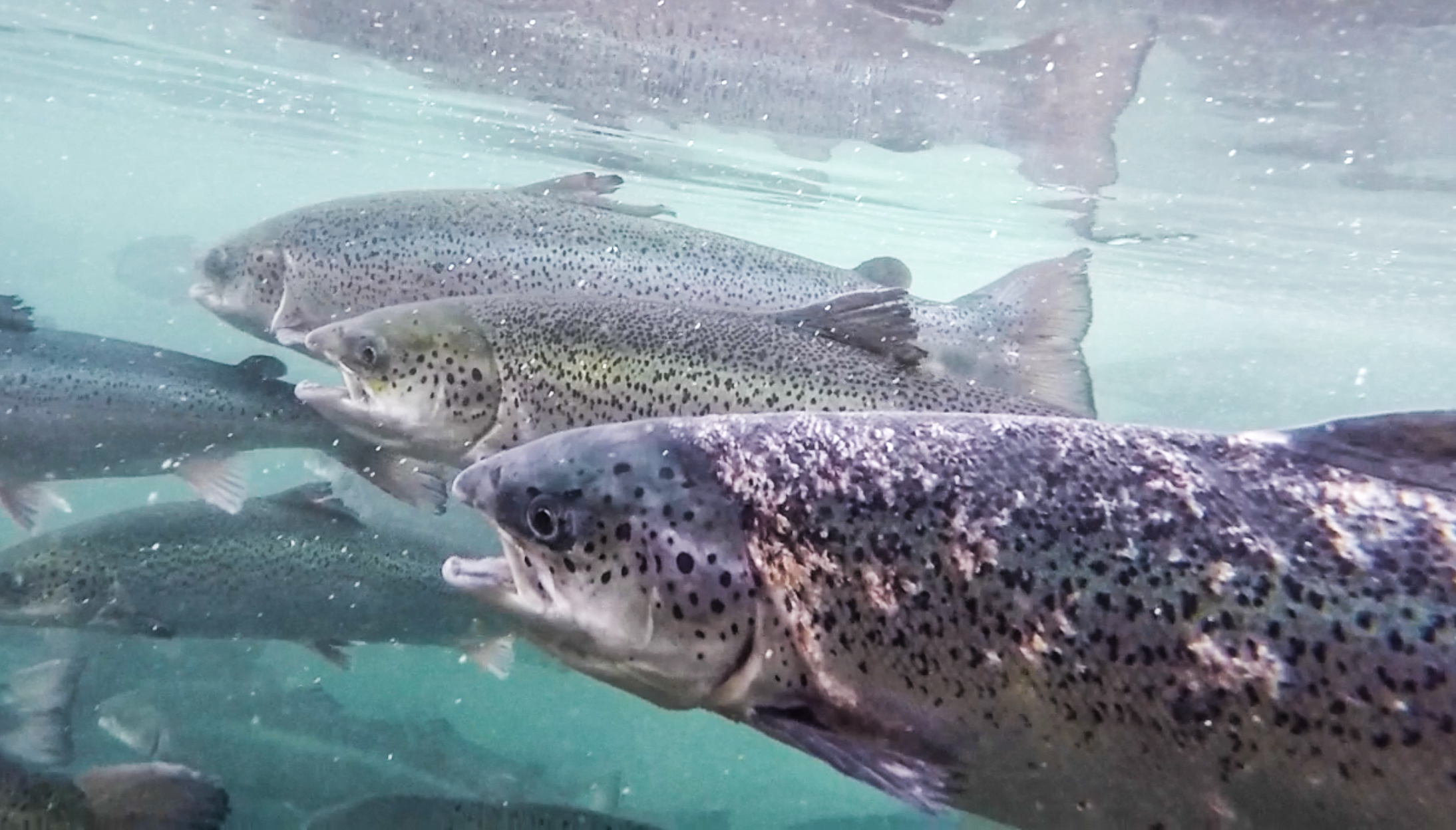
When disease infects intensively farmed Atlantic salmon, such as these, it spreads easily through the stock, amplifying the pathogen and into the wild. Photo by Karissa Glendale

Up to 45% of wild salmon exposed to salmon farms become infected with PRV. Photo by Tavish Campbell

Alexandra Morton is an independent biologist with a first hand perspective on the impact of salmon farming. Photo courtesy of Sea Shepherd Conservation Society
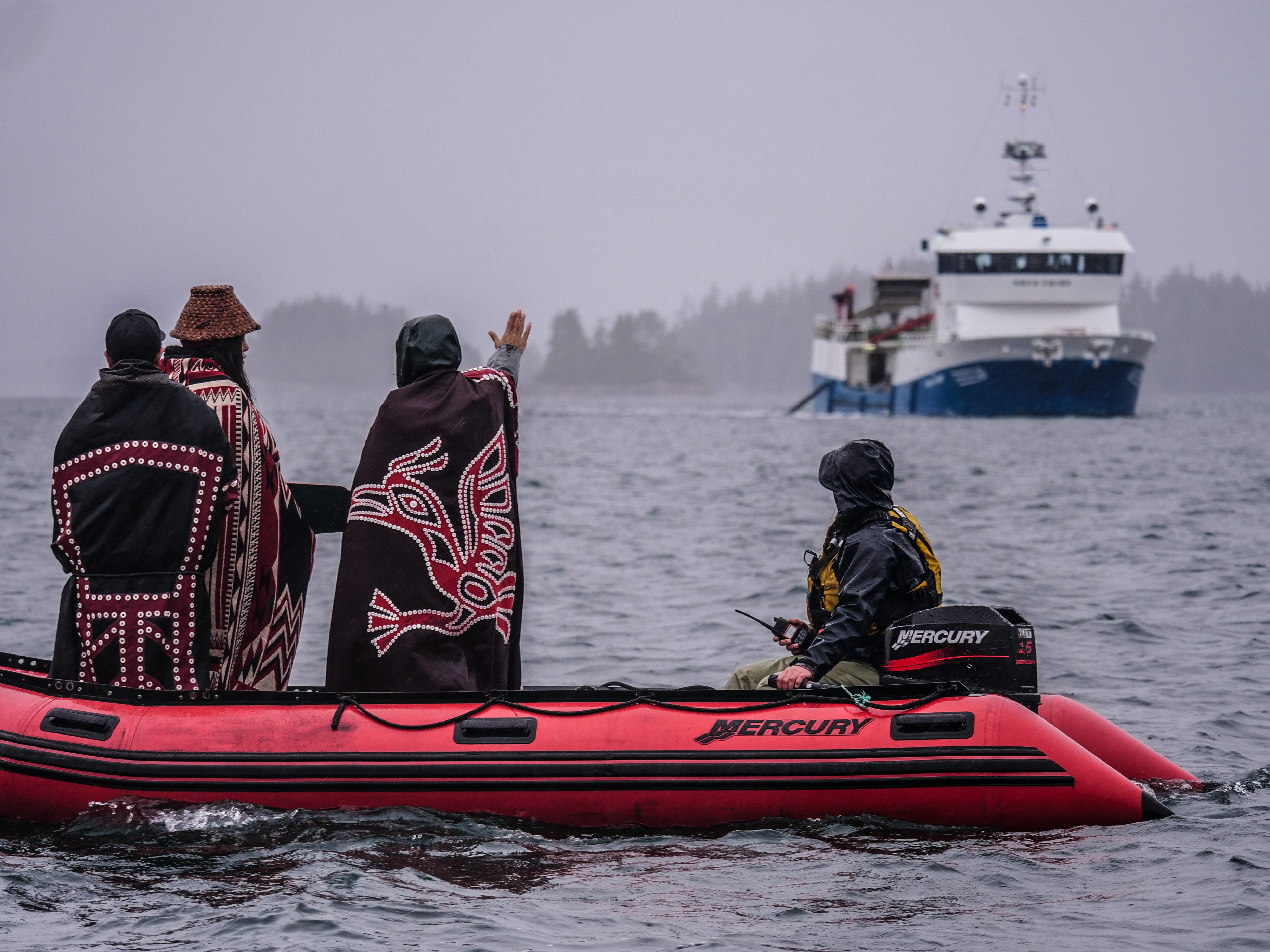
Indigenous women make final plea to Marine Harvest not to put any more farm salmon into Namgis territory. Photo by Alexandra Morton
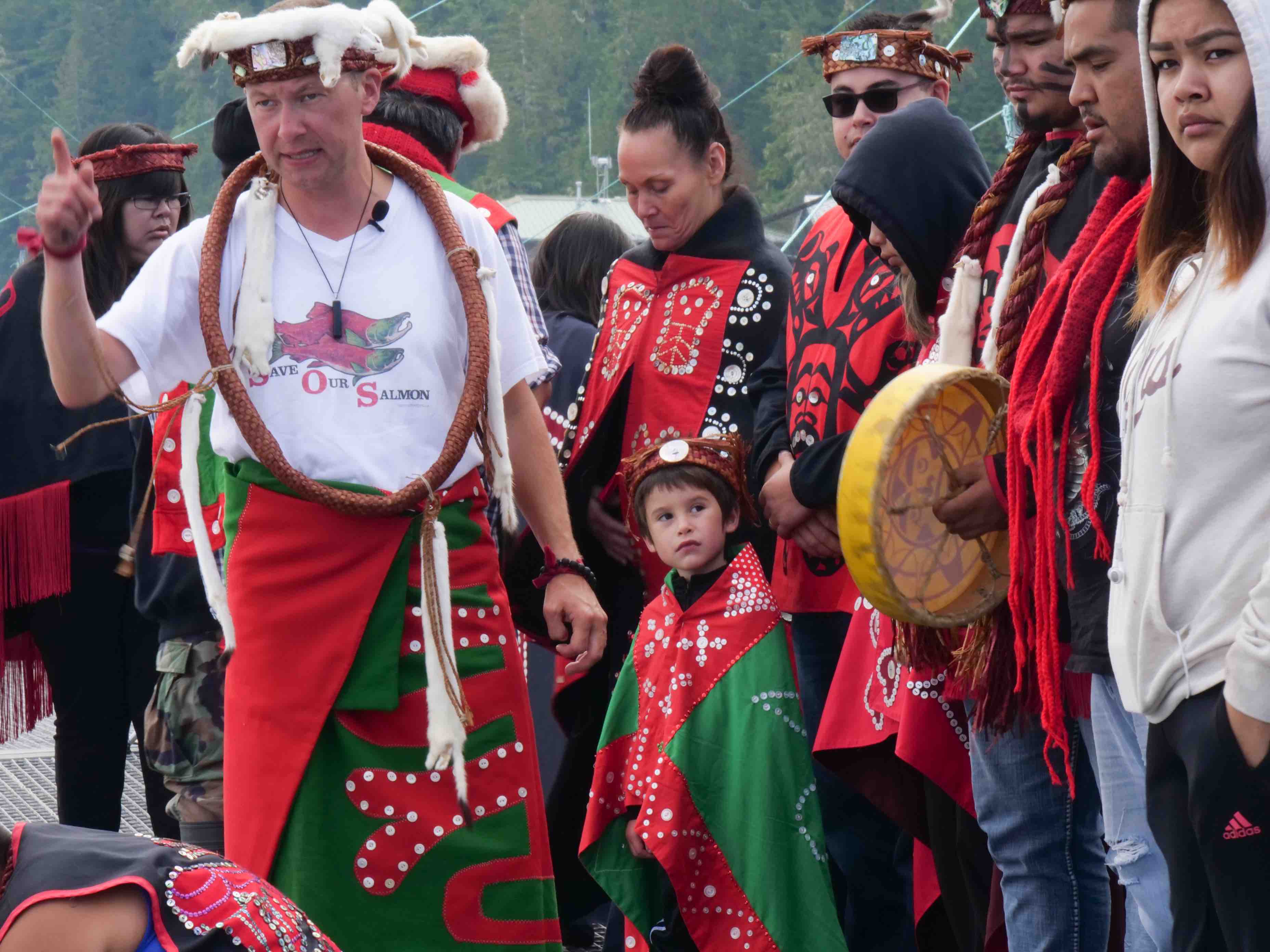
First Nations taking a stand on the Marine Harvest, Swanson Island salmon farm, the subject of the Namgis lawsuit. The facility was occupied for 280 days to inform government and Marine Harvest to remove this salmon farm from Namgis territorial waters. Hereditary chief Ernest Alfred in forefront. Photo courtesy of Sea Shepherd Conservation Society