The salmon farming industry in BC is on the verge of a major expansion and the federal government is changing Canada's laws to make sure it happens.
Canadian Senate Standing Committee on Fisheries and Oceans is studying aquaculture regulation. They are looking into whether a stand alone AQUACULTURE ACT should be written to make it easier for the aquaculture industry to expand in Canada. While there are many forms of aquaculture, the committee seems preoccupied with net pen salmon farming. Farming salmon in net pens is the problem child of aquaculture in Canada, the sqeaky wheel, with lobby presence in Ottawa.
There have been many government studies of this industry. Begining in 1987, the BC provincial Coastal Resource Interest Study promised not to allow salmon farms in key wild salmon habitat. In 2007, a committee of MLAs picked by BC premier Gordon Campbell recommended developing closed containment within 3 years, and moving the industry into it two years later (pg 53, 1.1). There were several other government studies and then the Cohen Commission which recommended salmon farm siting criteria protect wild salmon migration routes and all farms be moved accordingly (recommendations 15-17).
ALL OF THESE REPORTS HAVE BEEN IGNORED. Perhaps we will continue paying for these initiatives until some government committee comes up with recommendations that fit political ambitions. Perhaps this senate committee is the one the salmon farmers have been waiting for.

On February 25, 2014, DFO testified to the Senate committee telling them that the federal government plans to remove the most important section of the Canadian Fisheries Act because the salmon farming industry asked them to.
Mr. Bevan (DFO): I think the first steps that we were asked to take by the industry were to resolve the issue around the use of therapeutants and other treatments. Under section 36, it's illegal to put into the water any harmful substances, so that was a very critical impediment to further operation of the aquaculture industry, so that's what we're currently dealing with.
If you read the article below it becomes clear why section 36 of the Fisheries Act is so important. The lobster fishery is the biggest public fishery in Canada. Removing section 36 will prevent legal recourse for Canadians who do not want wild fish killed by salmon farming chemicals.

FISH FARM CHARGED IN CONNECTION WITH LOBSTER DEATHS
You might expect that when an industry tells government they need to release substances harmful to fish that government would say sorry you can't be located on the most productive wild fishing grounds in Canada. But what is actually happening is that government is saying, OK no problem, we will make this happen for you… we will change to laws so you can release harmful chemicals.
On March 26, 2014, I testified in front of this Senate Standing Committee on Fisheries and Oceans in Nanaimo BC.
As many of you know I have published numerous scientific papers on impact of sea lice from salmon farms. This work contributed to strict government limits on the number of sea lice allowed per farmed salmon. When the numbers lice per farmed salmon dropped, so did the number of lice on young juvenile salmon and the Area 12 Mainland Pink salmon stock rebounded.
I received an honourary Doctorate of Science from Simon Fraser University for this work. Last July I co-published the first paper on piscine reovirus in farm salmon in BC. No one contacted the journal to find fault with this work.
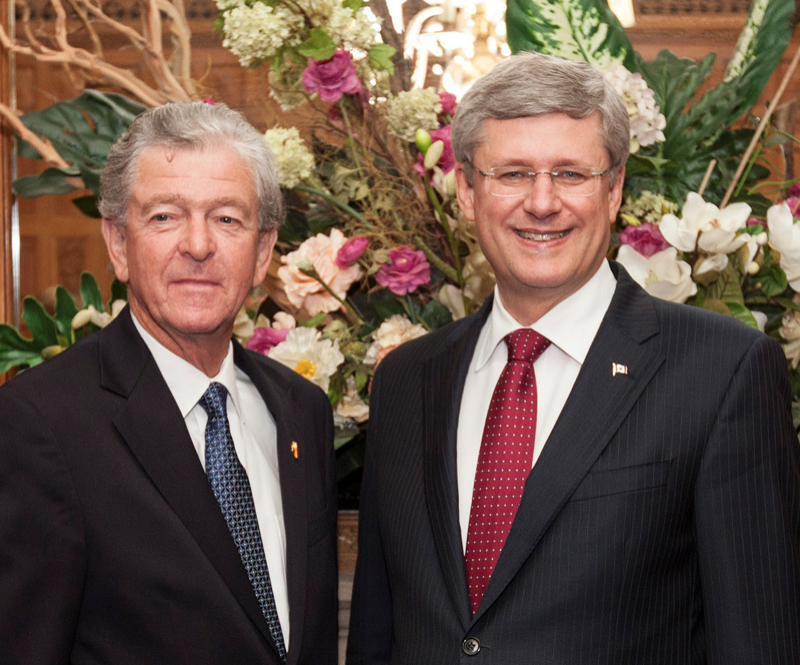 Senator McInnis, a statesman at heart with great panache, looked at me and said;
… a lie can be halfway around the world before the truth get's it's boots tied up…
Suggesting a scientist is dishonest is a serious matter. He must realize the potential impact on my reputation. Why call me to testify and then publicly insinuate I am lying? True, I do not have a degree in virology or parasitology, but this means my science is scrutinized more journals accept it for before publication, not less. Here is a list of my papers.
My question to McInnis; exactly what lie has been heard halfway across the world about salmon farming in BC?
A salmon farmer testifying that day, assured the senators sea lice are a just political problem, but that is not what the industry is saying in Norway:
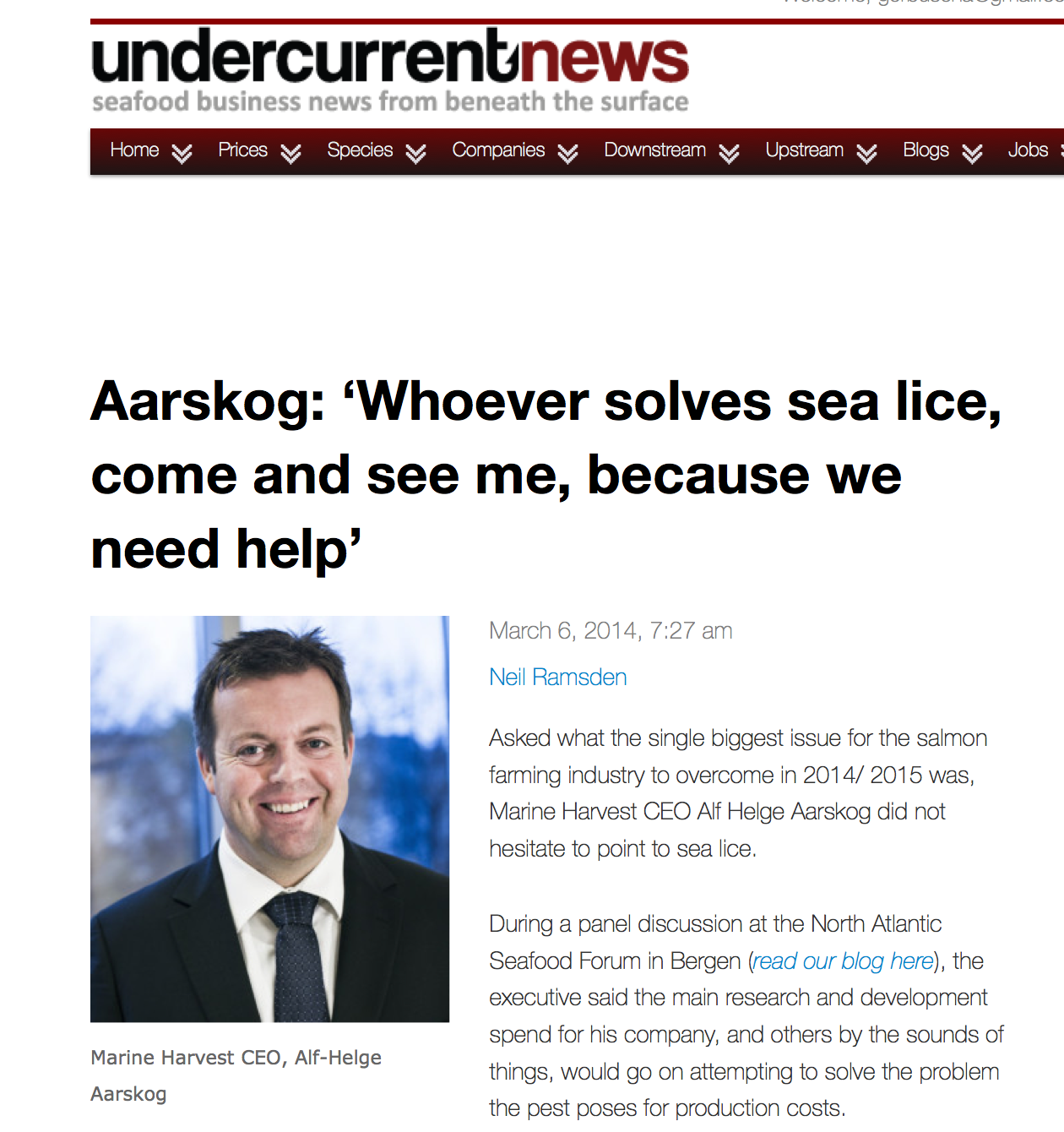
What business does an industry have expanding in BC waters when they can't control their sea lice at home? Are we really going to let them go through the same process here, drug after drug, at the expense of the local fish and fisheries, only to end up where they are in Norway? How does this make sense to anyone? Below is an online translation of an article appearing in a major Norwegian newspaper on April 4, 2014.Download Norway April 4.pdf (1075.5K)
The salmon farmers complained to the Senators that lack of social licence, public distrust of their industry, is their biggest road block in BC. Two days later Senator Nancy Green-Raine appeared in an interview throwing her full support and image behind salmon farming in BC which is 98% three big companies with head offices in Norway. Does she realize that anything that impacts wild salmon, impacts thousands of British Columbians, First Nations, wilderness tourism (a $1.6 billion industry in BC), whales, bears, eagles and the spirit of BC? Does she realize there are smaller more innovative aquaculture businesses in BC that will never flourish in the shadow of the mega-operators?
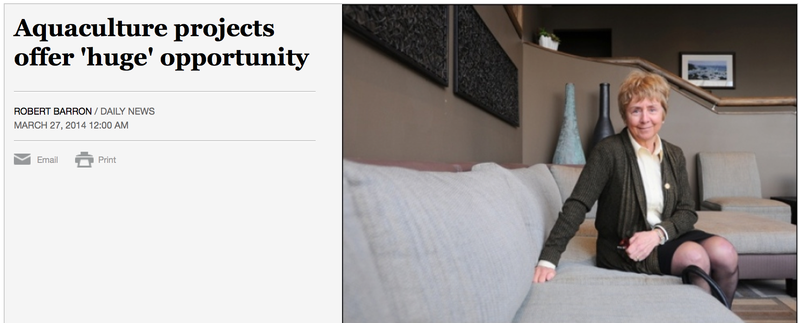
Greene Raine's views fail to reflect the findings of the Cohen Commission, that wild salmon migration routes must be protected from salmon farms (recommendations 15 -17). She did the three-company salmon farming industry in BC a huge favour, sending a clear signal that BC is open for investment in old, dirty technology that shoves all environmental cost onto the public of Canada. These farmers never deal with their waste. They use ocean protein once and then let it fall to the seafloor, even as they complain they are running out of fish to feed their fish.
You see to farm salmon, the first thing you have to do is go fishing.

There is concern that the herring fisheries currently being opposed by First Nations in the courts and on the fishing grounds are in aid of feeding farmed salmon. The courts found the Minister of Fisheries was trying to open a fishery on the west coast of Vancouver Island against the advice of her scientists. Now tension is rising on the Central Coast where First Nations are also trying to protect herring from DFO.
The herring roe goes to Japan, but the males and female bodies go to West Coast Reductions which list the BC Salmon Farmers as an industry associate.
Is the farmed salmon food shortage factoring into the Minister of Fisheries attempts to open herring fisheries against the advice of her scientists?
It is unclear how salmon farming in BC is considered sustainable on any level.
The Pattern
I think it is important to pull back and view the broader pattern.
1. January 2014, Harper government gives the BC salmon farming industry the green-light to expand
2. A few days later, Marine Harvest is listed on the New York Stock exchange, announcing plans to expand, inviting North American investment.
3. Plagued with sea lice worldwide, the industry cannot risk expansion without access to drugs that kill sea lice and so they ask that Section 36 of the Fisheries Act to be removed
4. A Senate Standing Committee on Fisheries and Oceans begins investigates granting salmon farmers ownership of the fish in their net pens,
5. A newly minted expert in salmon farming and Senator, recommends more salmon farms in BC long before their investigation conludes, contradicting the Cohen Commission with no explanation at all.
"At the end of the day, there is no solid evidence that salmon farms here impact wild salmon stocks" Senator Greene Raine Nanaimo Daily news March 2014
“I therefore conclude that the potential harm posed to Fraser River sockeye from salmon farms is serious or irreversible.”Justice Bruce Cohen – Cohen Commission, p. 22, vol 3 Recommendations
Senatorial praise is going to invite shareholders who want to profit from the BC coast being used to grow Atlantic salmon like chumming the water for sharks!
Almost immediateyly the expansion gots underway. The first two new salmon farm applications list a First Nation as the 'client' as, but the maps carry the Marine Harvest logo. MORE INFORMATION
No one wants to deny a First Nation economic opportunity. However, it has to be recognized their decision was made on behalf of everyone south of them as wild salmon from many rivers will swim through the effluent of those farms. Public consultation is no longer required.
The salmon farmers are promising an incredible 20,000 jobs if they get their own Aquaculture Act!
So you can see the gates are being pried wide open with no mechanism to close them.
AQUACULTURE ACT

The 2009 Hinkson decision in Morton vs Marine Harvest, ruled it is the same ocean inside and outside the pens.
Therefore, salmon farmers need a fishing licence to recapture their fish when they escape, unlike cattle ranchers who just go out and round them up. This suggests salmon farmers do not own the fish in their pens. Marine Harvest tried to appeal this point, but was denied.
What will happen if these big companies are given ownership of the fish in their pens? Who will own farmed salmon when they escape? Who will own the tons of wild herring trapped inside these pens? What happens if wild fish are viewed as a disease threat to the privately owned fish? Will wild fish be allowed to swim by the salmon farms? What about all the wild salmon predators in BC – the whales, seals and sea lions – will they be allowed to eat privately owned salmon when they escape? What happens if farmed salmon escape and are swimming with wild salmon – who gets to catch them? Can a commercial or sportfisherman intercept a school of privately owned escaped fish?
What can we do?
I have remained optimistic for a long time, but I have to say the situation is deteriorating rapidly. We are on fast ride down a slippery slope. In disputes, wild salmon vs salmon owned by international shareholders with teams of lawyers, lobbiests and free trade laws – you tell me how that is going to go. Now that a senator has gone public announcing "huge opportunities" in BC salmon farming, even before her committee has written its report, there will be increased investor interest. Like vultures circling a dying animal, the BC coast is losing all ability to protect itself.
Here are the options I see left to us:
1 – Talk to your MP, it can't hurt. Salmon farms have to get off wild salmon migration routes.
2 – Find out where Premier Clark stands on leasing the wild salmon migration routes of BC to the salmon farmers. BC has to sign a lease agreement for every new salmon farm in BC. Over 100,000 people have asked her not to do this. She has not gone public with her position yet. You can sign the petition and or write to her BC PremiersOffice premier@gov.bc.ca Will premier Clark take salmon farms off wild salmon migration routes?
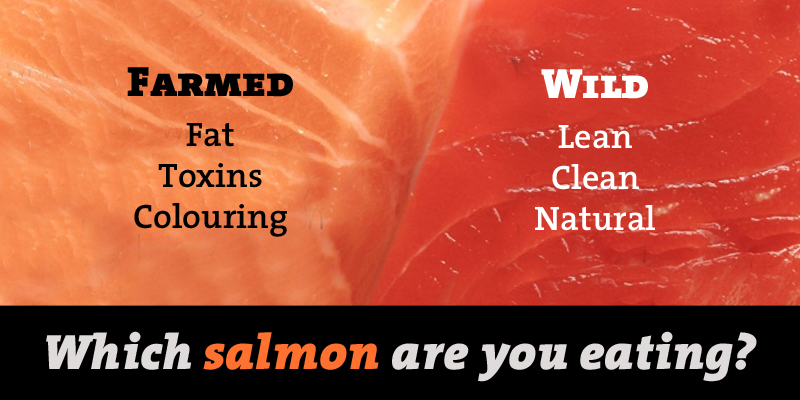
3 – Inform the consumers wolfing down farmed salmon sushi about the risks to our health and our planet.
Advertising
The salmon farming industry told the senators their biggest problem is public perception and they are using advertising to try to fix that.
Here is what one company, based in Norway, is telling the public on their website:
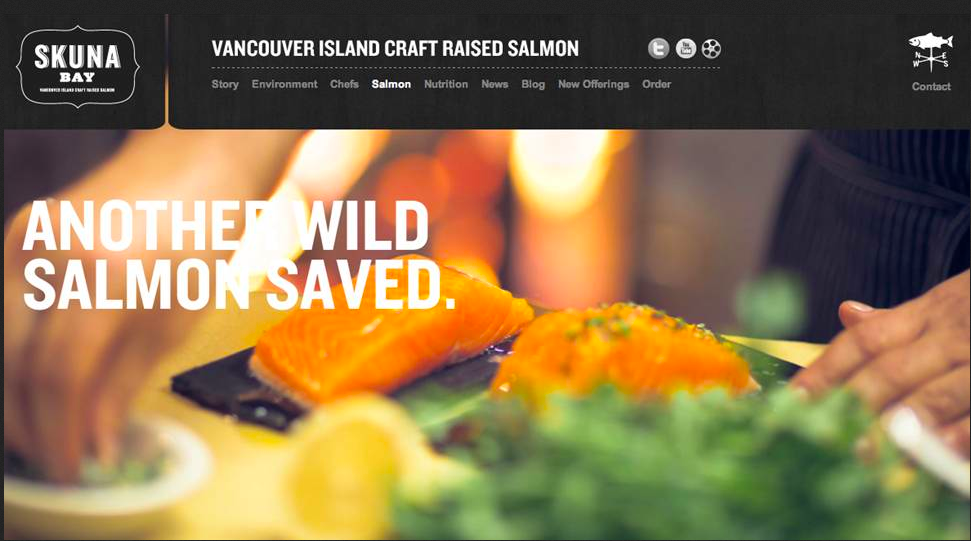
But wait a minute – Wild salmon quotas are not influenced by farmed salmon production. I don't see how farmed salmon sushi could possibly be saving wild salmon. What this ad does tell me is that the industry knows people care about wild salmon.
If lies can make their way around the world, well then so can truth.
All you business people out there know, talking to consumers is not cheap. But we have to ask ourselves have we done everything we can to get salmon farms off wild salmon migration routes. If we don't even try to reach the people who fueling the expansion of salmon farms in BC the answer is no – we just let it happen. We stood by and let it happen.
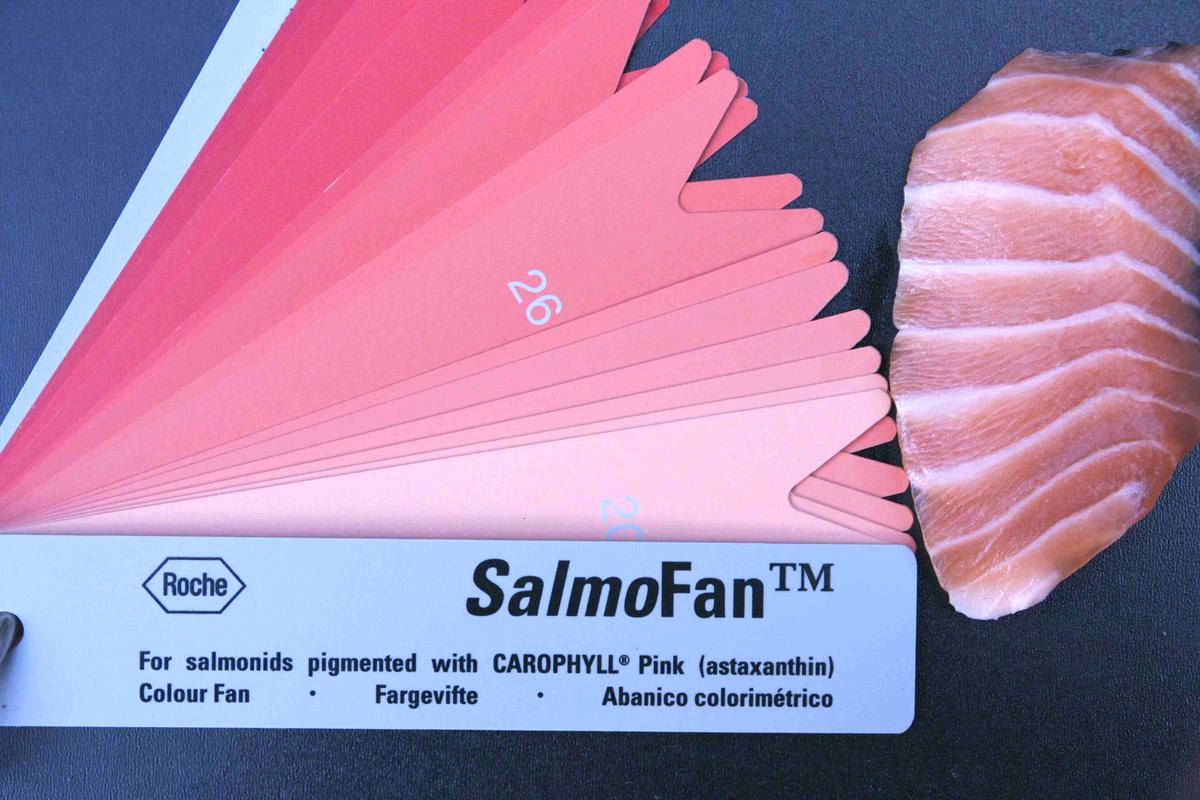
Democracy is in serious jeopardy along with much of the living world. Invited to testify before a Senate Committee only to be cast as a liar, opened my eyes to the reality of the situation. Once farmed salmon are owned by shareholders with the right to use toxic chemicals in the most prolific wild fishing grounds of Canada – it is over.
We have to speak to the people eating farmed salmon throughout North America. The viable industries do learn to become socially responsible and I think there are British Columbians trying to step up to this, but they will never become a flourishing aquaculture industry as long as the three Norwegians are dominating the market, the politics, the waterways.
Over the past 16 months 778 people have made an average donation of $50-$100 and this has kept the movement alive. It is a good start, but it is not going to go very far in trying to communicate with the American market.
See this trailer shown in European CLICK HERE
Perhaps BC needs to tell its story
DONATE TO SEEING TRUTH ABOUT SALMON FARMING IN BC GO AROUND THE WORLD
Pacific Coast Wild Salmon Society
Box 399
Sointula, BC V0N 3E0 (there is no tax-receipt)

Comments
One response to “Canada – changing its laws to fit salmon farming”
The federal government is at least consistent.
The federal government is consistently bad at fisheries management.
It is consistent in ignoring scientific advice.
It is consistent in ensuring that science and research are not used to inform public policy.
It is consistent in ignoring stakeholder concerns.
It is consistent in seeing regulation as a partnership between the strongest special interest and the government and consistently ignoring all others.
It is consistent in seeing ecosystems as something to be plundered and/or ignored.
And it is consistently elected.
So who will develop consistent evidence based fisheries policies?
-30-