After 6 months of asking the CFIA to confirm whether they retested my ISA virus samples or not – I got an answer from the Ministry of Health.
This unforgivable situation risks the wild salmon economy of the North Pacific and Canada’s reputation as a trade partner.
Dear Minister Ambrose
Thank you for prompting the CFIA to finally answer my question; did they retest the samples I sent to the Kibenge lab for ISA virus testing or not?
 Dr. D. Ian Alexander (CFIA) says in his letter to me that my samples were never retested. Download Ltr to Alexandra Morton re ISA BC Salmon.pdf (439.9K)
This is highly significant and something is very wrong here.
I accept that the CFIA has its reasons for not retesting my samples, however they took my samples from the lab and went to lengths to inform the World Organisation of Animal Health (OIE) that the ISA virus results by the Kibenge lab were “non-repeatable”.
Download CFIA (Evans) Letter (00627482).PDF (414.2K)
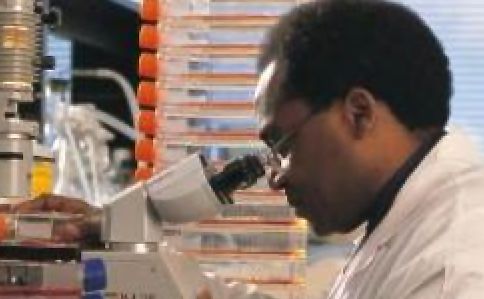 The Kibenge lab was one of only two labs in the world designated by the OIE as an ISA virus reference lab. That is why I chose to use this lab. The CFIA recommended the lab be suspended, the OIE complied, but will not state why. The word “non-repeatable” suggests the CFIA repeated the tests with different results. But clearly that was not the case.
The CFIA needs to report to you why they told the OIE that the Kibenge results were “non-repeatable.” Who exactly repeated tests on my samples taken from the Kibenge lab and where is that data?
In one of Canada’s biggest newspapers, the CFIA urged the OIE to suspend the Kibenge lab because “government labs couldn’t replicate his results.”
The Kibenge lab is not alone it its findings. Several Canadian government labs submitted test results to the Cohen Commission that were positive for sequences of the ISA virus in BC (exhibits 2040, 2053-136a, 2055, 2043, 2060, 2051, 2052). As well, Dr. Are Nylund, University of Bergen, testified at the inquiry that he got results positive for ISA virus sequence in BC.
ISA virus is an internationally reportable virus for all members of the World Organization for Animal Health.
The CFIA testified at the Cohen Commission that if ISA virus is in BC – borders would close to BC farmed salmon. It appears as if the industry held its breath and the CFIA compromised its integrity.
When ISA virus repeats its grimly inevitable global pattern and mutates into a virulent outbreak in British Columbia, risking the wild salmon economy of the North Pacific, and Canada’s reputation as a responsible member of the world trade community, the record will show results from a top Canadian lab could have been used to contain the virus. Look at what is underway in Eastern Canada. The CFIA allows ISA-positive farmed salmon to remain in the water and approved them for sale to the public. New variants of ISA are now spreading along the coast of eastern Canada. ISA is not something that can remain hidden.
Minister Ambrose, you were given oversight of the CFIA last month because Stephen Harper can see there are serious problems with the CFIA and this is one of them
 This goes beyond the CFIA. I also attach a “confidential” memo wherein the BC government veterinarian briefed a provincial minister that ISA virus is not a threat to BC because live Atlantic salmon eggs have never been imported to BC. In fact, nearly 30 million live Atlantic salmon eggs had been imported when Dr. Sheppard wrote that and he was the man in charge of their health. Dr. Sheppard now works for Fisheries and Oceans Canada – still in charge of farmed salmon health. This further erodes confidence in Canada’s response to this virus. Download ISA Confidential BCP1001938 exhibit 1679.pdf (491.4K)
All I ask is that you do what you can to allow the Kibenge lab to continue its work without further harassment. There is a reason the OIE chose this lab in the first place. The Kibenge lab diagnosed the ISA epidemic before it hit Chile with a $2 billion bill. Norway has used this lab, the industry has used this lab. They are on the leading edge of scientific publication on the ISA virus. There was never an issue with the Kibenge lab until it reported ISA virus sequence in BC, which apparently threatens trade in BC farm salmon.
Again, thank you Minister Rona Ambrose, I have been asking the CFIA to confirm whether they retested my samples or not for 6 months, one letter to you and I get the answer. Prime Minister Harper was right to appoint you to oversee the CFIA.
Respectfully,
Alexandra Morton

Comments
8 responses to “It is Official – the CFIA never retested my samples”
Please don’t take my comments out of context and use them to make wild speculations and fallacious conclusions about what salmon farmers think or feel.
Please do read the OIE audit report about Kibenge’s lab, explaining why its “reference” status was removed: http://www.oie.int/fileadmin/Home/eng/Internationa_Standard_Setting/docs/pdf/Aquatic_Commission/Evaluation_OIE_Ref_Lab_ISA_website.pdf
Here are some highlights:
“There is currently no formal quality system in place within the OIE‐RL for ISA…”
“…fall well short of the SOPs required for an internationally recognised standard such as ISO‐17025…”
“There are insufficient traceable records for instrument calibration, monitoring and maintenance, or laboratory and equipment cleaning…”
“The panel has serious concerns regarding the current setup in the OIE‐RL. The primary concerns were the cramped, untidy conditions of the laboratories, particularly the general laboratory [room 329(S)] where both sample preparation and post‐PCR analysis were performed in close proximity to each other.”
“The panel believes that there is a serious risk that the integrity of the test samples will be compromised.”
“…the panel had concerns that Dr F. Kibenge may deviate from these procedures and use alternative non‐validated in‐house methodologies.”
“When investigating dubious samples the diagnostic procedure should restart from scratch using a fresh extraction of RNA from the original sample.”
“There seemed to be a lack of appreciation of the obligations on a Reference Laboratory for thorough investigation of dubious or illogical results, together with the need for evaluation of the biological significance of results.”
You are not telling the truth about Kibenge’s lab. It is not being harassed, and you are free to send in as many dubious samples as you want for the lab to test. The only difference now is it can no longer can claim to be an OIE reference lab for ISA. That status was removed because it did not meet the OIE’s standards, as the audit shows.
Finally, you again claim that Are Nylund and other labs found ISA virus. You are not telling the truth about this either. Follow-up tests, which are required as a standard procedure worldwide for ISA virus testing, showed no evidence of the virus. Why do you always ignore this fact, instead pretending that RT-PCR tests on their own are definitive? If your doctor does a blood test and tells you that you might have terminal cancer, do you go home and make out your will, or do you get the follow-up tests that can definitively show whether or not you have cancer?
I see the Canadian Communications Officer(Grant Warkentin)for one of the world’s largest salmon farm company, Cermaq (Mainstream Canada) is quick to re-spin this important and evidently damaging information. The findings Grant notes could be written for every operational and accredited lab functioning today. The removal of OIE status for the Kilbenge lab was predicted in December of 2011 by the lawyer Greg McDade, questioning CFIA and DFO during the Cohen Commission hearings: “Dr. Kibenge had the temerity to announce positive test results and the result is his lab is being analyzed by you … I suggest to you that the federal government is going to try and take away his OIE certification as a punishment for this…I predict within the next 12 months Canada will go after his credibility; isn’t that right?” Why was there no routine testing or concern of the lab before ISA was detected in BC farmed salmon?
With respect to the confirmation of ISA in BC farmed salmon, that is exactly what Dr. Nylund did with the samples that tested positive in Dr. Kibenge’s lab, he did the requisite follow-up tests. In addition, this was described publicaly and in all honesty to the low level signal and possible interference in an objective manner by Dr. Morton from her post on 2 Nov 2011 entitled: “More European ISA virus detected in wild BC salmon”. Grant, it appears you can’t be bothered to read outside your talking points or provide objective information when it may threaten the industry you are paid to protect.
Claudette, instead of making ad hominem and strawman attacks on me, please go read the audit report more thoroughly.
You say “The findings Grant notes could be written for every operational and accredited lab functioning today.” So you dismiss out of hand the findings of the independent OIE audit panel? Do you know better than the scientists on the audit panel?
And re: Nylund, now you, Claudette, are not telling the truth when you say “With respect to the confirmation of ISA in BC farmed salmon, that is exactly what Dr. Nylund did with the samples that tested positive in Dr. Kibenge’s lab, he did the requisite follow-up tests.”
No. He did not confirm the virus. He did PCR tests. He did not sequence the entire virus, nor did he do a cell culture to confirm the virus, as directed by the OIE’s Manual of Diagnostic Tests for Aquatic Animals: http://www.oie.int/fileadmin/Home/eng/Health_standards/aahm/current/2.3.05_ISA.pdf
Claiming that ISA was “confirmed” is dishonest and Nylund does not say that he “confirmed” anything. At least Ms. Morton linked Nylund’s report so we can read it for ourselves instead of her (and your) interpretation: http://alexandramortonblog.com/Report%20021111.pdf
Here is what Nylund really said:
“We were able to detect ISA virus genome in gill sample 36, but this result was not reproducible. The ct value of the positive sample was close to the detection limit for the assay.
“The results obtained by Kibenge (using heart tissue) could not be reproduced by us using gill tissues from the same individuals. This could be explained as a result of tissue tropism for ISA virus in O. nerka, or a combined result of gill tissues sent to us.”
Please tell the whole truth about ISA virus testing. Leaving out the rest of the story makes it look like you are trying to trick people into believing negative tests are actually positive. That would be scientifically irresponsible.
Grant – Why did the CFIA tell the OIE they could not repeat Kibenge’s results when now they admit they never retested the samples at all?
The OIE is an international agency funded to prevent epidemics.
ISA virus is spreading wherever your industry operates.
This is serious.
Why did the CFIA mislead us and the OIE?
What was that about?
You realize they did not come clean until the Minister of Health was asked to take on responsibility for the CFIA. The CFIA never answered when they were part of the Ministry of Agriculture.
This is very troubling.
Grant why did the CFIA tell the OIE they retested the ISA samples?
Ms. Morton, since I asked first, it is only polite if you please answer my questions first about how you continue to misrepresent how virus testing works, and explain why you keep misrepresenting what other scientists actually said, then I will attempt to answer yours.
Grant my research on European salmon farming viruses is undergoing peer review and being published http://www.virologyj.com/content/10/1/230
As for ISA virus, sequences of ISA virus have been detected by several labs. That is the uncomfortable truth.
The CFIA should have done the same tests as the Kibenge’s, then called the experts together to discuss the findings and how to proceed. But they didn’t, they misled us. They have no results to discuss – they are on the sidelines of this work, heckling and harassing us, but without any science.
So I am continuing this research using the labs that are on the leading edge of ISA virus research around the world. I am doing government’s work and when we are done will publish the results. Sadly by then it may be too late.
Ms. Morton, your argument that “sequences of ISA virus have been detected” is circular.
Again, as I stated earlier, follow-up tests, which are required as a standard procedure worldwide for ISA virus testing, showed no evidence of the virus.
Why do you always ignore this fact, instead pretending that RT-PCR tests on their own are definitive?
This is the procedure for confirming the ISA virus, as defined by the OIE, in a manual which Kibenge helped write: http://www.oie.int/fileadmin/Home/eng/Health_standards/aahm/current/2.3.05_ISA.pdf
The only Canadian samples of fish which have passed the tests described here are on the East Coast of Canada, where ISA is naturally present. Thousands of fish on the West Coast, wild and farmed, from Alaska to Oregon, have been tested and all been negative.
Now to answer your question to me.
The CFIA never claimed to have re-tested your samples, you have taken the word “non-repeatable” grossly out of context. Here is what was actually said in Dr. Brian Evans’ letter to the OIE, which you link above as evidence (http://alexandramortonblog.com/CFIA%20%28Evans%29%20Letter%20%2800627482%29.PDF ):
“I wish to acknowledge the professionalism and high level of engagement demonstrated demonstrated by the Atlantic Veterinary College in seeking to determine and address the scientific basis for the reporting of disparate and non-repeatable results.”
Evans is recognizing the AVC for its attempts to explain the results, he is not in any way claiming that CFIA re-tested your samples.
The re-testing of your samples was done by Are Nylund, as you have mentioned, and as I mentioned below, Nylund himself said Kibenge’s results were not reproducible:
“We were able to detect ISA virus genome in gill sample 36, but this result was not reproducible. The ct value of the positive sample was close to the detection limit for the assay.
“The results obtained by Kibenge (using heart tissue) could not be reproduced by us using gill tissues from the same individuals. This could be explained as a result of tissue tropism for ISA virus in O. nerka, or a combined result of gill tissues sent to us.”
Grant see below – the CFIA is on the record saying they retested the samples from the AVC (Kibenge) lab. Now they say they did not retest.
The tests you talk about above were Dr. Routledge’s samples of Rivers Inlet sockeye. Everyone – Miller,(DFO) Gangne (DFO), Nylund (U of Bergen) got positive results from those samples.
For those following this conversation – “confirmed” in Canada means a live virus was found and grown outside the fish. The positive tests results by the AVC lab were not for the live virus, they were for pieces of the ISA virus sequence. Places like Norway who are serious about halting ISA – do not use the live virus test. If you found the partial fingerprint of a known criminal in your house – you would want to do further testing and that is what we are doing. ISA virus is the most lethal salmon virus known – we need to know why pieces of it are turning up in labs who test for it.
As for whether the CFIA said they retested the ISA virus positive samples – decide for your self.
http://www.theglobeandmail.com/news/national/ottawa-moves-against-pei-lab-that-reported-virus-in-bc-salmon/article5582798
“letter to the World Organization for Animal Health, the CFIA urges the international agency to accept the findings of an independent audit that recommends “suspension of the reference laboratory status,” of the facility”
“CFIA has challenged the validity of Dr. Kibenge’s tests, saying government labs couldn’t replicate his results.”
……………………………………………………………
http://www.theglobeandmail.com/news/british-columbia/no-lethal-virus-in-pacific-salmon-cfia-says/article554784
“The government of Canada in collaboration with the province of British Columbia has completed testing all samples related to the suspected infectious-salmon-anemia investigation in B.C. Based on the final results, there are no confirmed cases of the disease in wild or farmed salmon in B.C.,” he said.
……………………………………………………………
http://www.inspection.gc.ca/animals/aquatic-animals/diseases/reportable/isa/statement-2013-07-05/eng/1373038790217/1373041710849
In Canada, infectious salmon anaemia (ISA) is a federally reportable disease. This means that all suspected cases must be immediately reported to the CFIA for follow-up investigation and testing. In late 2011, the former OIE reference laboratory at the AVC reportedly found evidence of ISA.
Because any suspected cases of ISA must be confirmed at a designated federal laboratory, the National Aquatic Animal Health Laboratory, overseen by Fisheries and Oceans Canada (DFO), conducted testing of fish samples. The positive test results reported by the AVC were not corroborated by the DFO laboratory.
Due to the differences observed in these test results, the CFIA conducted evaluations of both laboratories to assess their capability to reliably detect the ISA virus in accordance with accepted scientific standards. The evaluation conducted at the AVC identified concerns, which may have led to the questionable ISA test results. This information was shared with the OIE.
Grant – thank you for this opportunity to discuss this with you.